
Understand the wheel before you place a bet
 Available in US
A practical guide to wheel variants, multiplier features, demo play and the limits of roulette strategies and prediction claims.
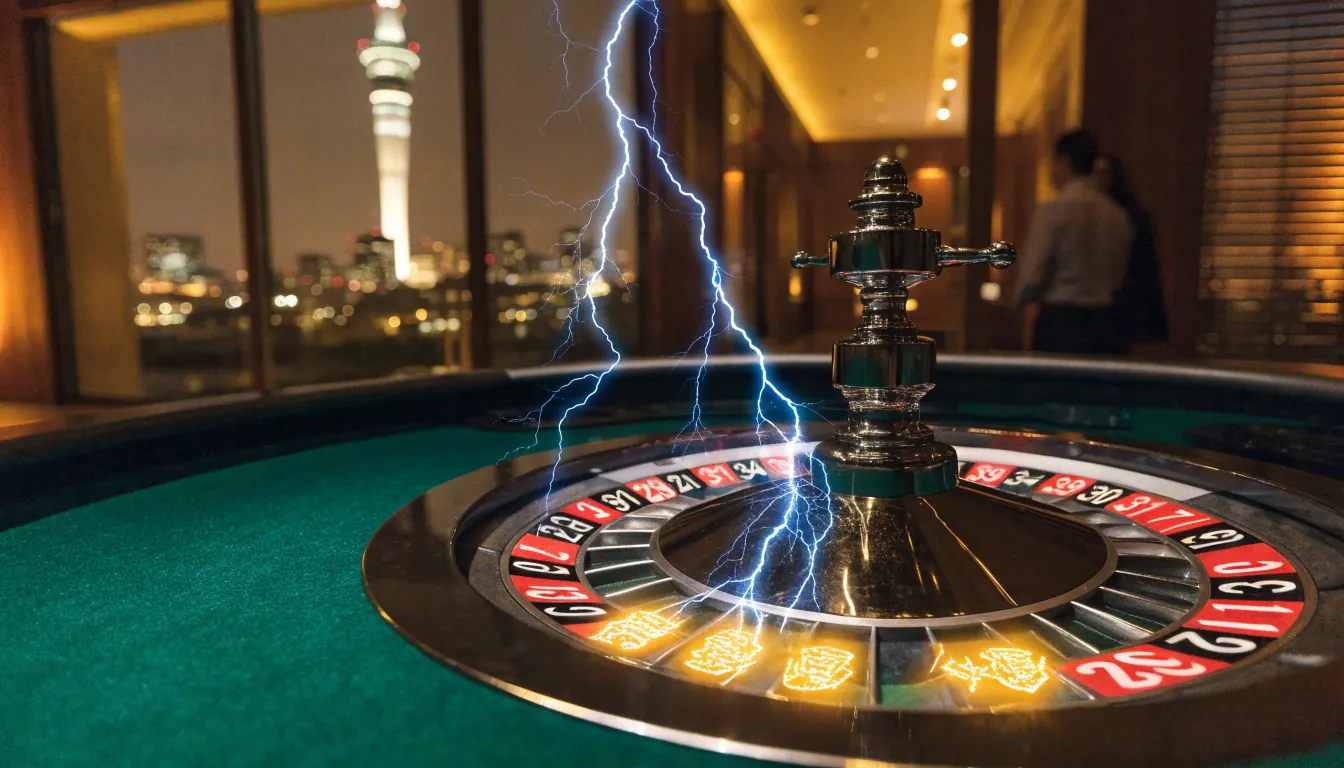
How Lightning Roulette’s Number Multipliers Fit Into a Roulette Spin
Lightning Roulette puts attention on individual numbers and multipliers, but the familiar roulette wheel remains important. To understand what a number-based wager means, first identify the wheel variant underneath the game. European and American roulette do not have the same pockets or house edge, so the chance of a particular number appearing depends on which layout is in use.
A European wheel has 37 pockets: numbered pockets plus a single zero. An American wheel has 38, adding a double zero. That extra pocket changes the basic odds. On the European layout, any one number has a one-in-37 chance of landing on a spin; on the American layout, it has a one-in-38 chance. The house edge is 2.70% for European Roulette and 5.26% for American Roulette. The second zero gives the house a larger advantage, even though the betting table may look broadly familiar.

Those figures describe the underlying roulette wheel, not a special Lightning Roulette outcome. A multiplier attached to a number, if present in a particular version, should be treated as a separate game feature rather than as a change to the wheel’s ordinary probabilities. The multiplier does not make its number more likely to land merely because it offers a larger potential return. Without confirmed rules for the specific game being offered, it is not safe to assume how multipliers are selected, how they affect payouts, or which bets qualify.
That distinction matters when you read a game screen or its rules. Check which roulette variant is named, how many pockets its wheel has, and what the rules say about number bets and any multiplier feature. A title alone does not tell you whether the game uses a European or American layout, nor does it establish the terms attached to a multiplier. The wheel determines the baseline chance of a number; the game rules determine how a qualifying wager is settled.

A straight-up bet is a wager on one number. In ordinary roulette, you can also spread wagers across multiple numbers, subject to the game’s available betting options and limits. Covering every number is not a way to guarantee a profit: the zero pocket or pockets still matter, and the amount staked across the covered numbers matters too. In Lightning Roulette, you should not assume that every number can be covered in the same way or that a multiplier applies to every bet. Read the displayed rules before placing a wager rather than inferring terms from the name.
There is no universally correct number to choose. Each spin is independent: earlier results do not make a particular number more or less likely on the next spin. A run of the same colour, a number that has not appeared recently, or a sequence shown in a results panel does not alter the wheel’s probabilities. A multiplier may change the possible payout under stated conditions, but it cannot turn a number into a more probable result.
This is why the European or American wheel is not a minor detail in a Lightning Roulette game. It changes the number of possible pockets and the house edge before any extra feature is considered. If you are comparing versions, establish the wheel layout first, then check the rules governing the specific number wagers and multipliers. Treat the multiplier as a payout feature, not a prediction about where the ball will land.
Live and Online Play: Check the Rules Before You Join
Lightning Roulette may be presented as a live-casino game or as an online casino title, but those descriptions tell you how a game is offered, not whether the service is operating under New Zealand’s licensing framework. A live presentation does not, by itself, establish who regulates the casino or what legal protections apply. The same caution applies when a game’s name appears on a website: availability is not evidence of a New Zealand licence.
New Zealand’s approach changed in 2026. The Online Casino Gambling Act 2026 established the country’s first domestic licensing system for online casino gambling and took effect on 1 May that year. Before the Act, online casino gambling supplied from outside the country was not licensed or supervised by a New Zealand regulator. Customers who wagered through offshore websites during that period had no domestic government recourse if a dispute arose.
The transition is not an immediate switch to a fully operating licensing system. Providers that were already serving people in New Zealand before the Act took effect may continue during the transition, subject to its provisions, until 1 December 2026. The full licensed regime is not expected to be operational until 2027. That means the start of the new framework should not be mistaken for a claim that every online casino is already licensed locally.
The responsibilities are divided between two public bodies. The Department of Internal Affairs is New Zealand’s primary gambling regulator and oversees regulation of the online casino licensing framework. The Gambling Commission handles licensing decisions: it considers and determines casino licence applications, issues online casino licences, and approves changes to licence conditions. Oversight of the framework and decisions on individual applications are related duties, but they are not the same job.
For you, the practical point is to distinguish a provider’s ability to operate during the transition from a decision that it has received a licence under the new system. A statement that a service is available, or that it has operated in the market before, is not equivalent to a licensing decision. Nor does the name of a roulette game tell you which company provides the gambling service or which legal rules apply to that company.

There is also a restriction on promotion during this period: online casino gambling services must not be advertised to people in New Zealand. This is not merely a matter of how an advert is worded. A promotion can make a service appear officially endorsed or locally regulated when that is not what its status establishes. Informational descriptions of a game should not be read as an invitation to join or as proof that a particular service is licensed.
New Zealand does not permit online casinos to be based domestically under the earlier Gambling Act 2003. The 2026 Act creates a route to domestic licensing, while its transitional provisions allow qualifying existing providers to continue for a limited period. The two points can sound contradictory if “operating in New Zealand” is treated as meaning “based in New Zealand”; they refer to different things. A provider serving customers here is not necessarily established here.
Before deciding whether to use a live or online casino service, separate the game’s presentation from the provider’s legal position. Check what the service says about its status and understand that the Commission, not a game title or a promotional claim, makes licensing decisions. During the transition, the distinction matters: the framework is being introduced, but its full licensed operation is still ahead.
First Person Lightning Roulette: What You Can and Can’t Verify
“First Person Lightning Roulette” is a name associated with a roulette variant, but the name alone does not establish how a particular version looks, works or can be accessed. A page using it may describe a game, make a claim about its format, or simply repeat the title. Those are different things. Check what the page actually identifies before treating a feature or offer as part of the game itself.
The phrase “first person” can sound like a promise about the player’s view of the table. It is not enough, by itself, to confirm a camera angle, interface, dealer arrangement or other design detail. Nor does the name establish that the game is available at a particular site. If a description gives no clear basis for its claims, the sensible conclusion is that those details remain unconfirmed—not that they can be filled in from the title.
The same caution applies when a page presents a demo, a stated return percentage or a list of sites alongside the game’s name. A title does not verify that a demo exists, that a particular version is offered, or that a figure applies to it. Return-to-player figures describe a theoretical long-run relationship between stakes and payouts; they do not tell you what will happen on an individual spin. To assess a specific claim, look for a clear identification of the game and the rules or terms the claim concerns. If those are absent, do not treat the claim as a property of First Person Lightning Roulette.
A result in roulette is independent of the results before it. A run of one colour, a repeated number or a long gap since a number appeared does not change the probability of outcomes on the next spin. This remains true whether a player is looking at a standard roulette table or a version carrying the First Person Lightning Roulette name. A display of previous results can record what has happened; it cannot make the next result more likely.
That distinction matters when a site implies that a visible history, a special presentation or a game label provides a way to anticipate what comes next. Past spins are not clues that alter the next spin’s odds. The title may tell you what the game is called, but it cannot establish a predictive feature.
Some pages also place the game beside claims about access restrictions or payment methods. A reference to “not on Gamstop” does not, on its own, confirm that a particular version is available to you or explain what protections apply. Likewise, seeing “pay by phone” near the title does not establish that this game can be funded that way. Those are claims about a site or its payment arrangements, not proof of a game feature. Treat them separately and verify the relevant terms rather than inferring them from the game name.
If you cannot identify the version or substantiate a claim attached to it, avoid relying on that claim when deciding whether to play. The reliable point is narrower: First Person Lightning Roulette is a named roulette variant, while interface, availability, payment and performance claims need their own evidence. Whatever the presentation, roulette results remain independent from spin to spin.
A Roulette Strategy Cannot Change the Odds
A betting plan can organise your choices, but it cannot make a roulette number more likely to appear. That distinction matters when looking for a “best” Lightning Roulette strategy: a system may tell you what to bet, when to stop or how to divide a stake, but it does not alter the wheel’s probabilities. There is no pattern of wagers that turns the game into a reliable way to beat the house.
Do
- Use a strategy to organise your betting choices
- Treat systems as a way to structure your decisions
- Recognise that each spin is an independent event
Don't
- Assume a strategy can change the wheel's probabilities
- Believe that a pattern of wagers can beat the house
- Mistake a staking chart for a guaranteed advantage
The underlying roulette variant matters more than the order in which you place bets. On a single-zero European Roulette wheel, the house edge is 2.70%. The house edge is the statistical advantage built into the game’s rules over repeated play. A staking system does not remove it. If a Lightning Roulette game uses a particular roulette layout, that layout’s ordinary number probabilities still matter; any additional game features should not be mistaken for a betting method that guarantees an advantage.
Strategies often focus on stake size or bet selection. A progression system, for instance, changes the amount wagered after a win or loss. That may alter the size and timing of swings in your balance, but it cannot make a losing number more likely to win next time. Likewise, switching between single-number bets and broader outside bets changes which outcomes pay and how much they pay, not the chance of the wheel landing on a particular pocket.
Past results can make patterns seem persuasive. A number that has not appeared for a while may feel “due”; one that has appeared repeatedly may seem likely to continue. Neither impression changes the next spin. Each spin is a new event, and earlier results do not shift the probabilities for later ones. A record of previous outcomes can describe what happened, but it cannot establish what the next result will be.

This is why claims about a lightning roulette strategy that “beats” the game need careful scrutiny. A staking chart can sound precise while leaving the essential odds untouched. The same applies to systems that divide a bankroll into units, rotate between bet types or increase stakes after losses. They can create rules for play, but rules for choosing stakes are not evidence of an improved chance of winning.
There is no universally best roulette system for producing a profit. You might prefer a plan because it is simple to follow or because it limits how often you change your bets. Those are practical preferences, not mathematical advantages. A strategy is only as useful as the decision it helps you make; it cannot promise that the result will be favourable.
When comparing advice, separate two questions: does the system make your betting choices more structured, and does it change the game’s odds? The first may be true. The second does not follow from a pattern of bets, a streak, or a confident prediction. Treat systems as ways to organise decisions, not as a means of overcoming the roulette rules.
How to Play—and Why No Method Can Guarantee a Win
Roulette is a wager on where a wheel’s ball will stop. To play, select a bet offered by the game, place it before betting closes, and wait for the result. The bet determines what outcome you are backing; it does not influence the wheel. In Lightning Roulette, read the rules shown for the particular game before staking money, especially where its special features affect the way a round works.
- Read the rules for the specific game version
- Identify the available bets and their payouts
- Determine the amount you are prepared to lose
- Confirm that the stake does not exceed your budget
That distinction matters when you see claims about how to win at Lightning Roulette. A betting choice can change which outcomes would pay under that game’s rules, but it cannot make a result more likely to occur. Roulette spins are independent: earlier results do not change the probability of outcomes on a later spin. A run of one colour, a number that has not appeared recently, or a previous winning streak offers no reliable signal about what comes next.
There is no best way to bet that turns uncertainty into a dependable win. A method may tell you how to divide or change your stakes, but it cannot control the result. Nor can a sequence of past outcomes establish that the next spin is “due” to land on a particular number or group. Every real-money bet can lose, including a bet made after careful thought.
Treat cheating claims with caution
Searching for a way to cheat Lightning Roulette can lead to claims about secret patterns, software tricks or supposedly guaranteed systems. None should be treated as a sound way to win. A claimed pattern does not change the independence of spins, and instructions that ask you to install unofficial software, disclose account details or bypass normal access controls can expose you to risks unrelated to roulette.
An app download does not provide a way to predict or control a spin. If you use an app, check what you are installing and read the game’s rules within it; do not assume that an app’s presence makes a winning claim credible. Avoid downloading files or sharing personal information on the strength of promises that a system can beat the game.

You can keep the decision process simple: understand the available bets, decide what you are prepared to lose, and stop if continuing would exceed that amount. Do not risk money needed for bills or other commitments, and do not increase a stake to recover losses. A previous loss does not make a win more likely on the next spin.
The same caution applies after a win. A favourable result does not prove that a method is working or that future results will follow the same pattern. Roulette remains uncertain from spin to spin. The useful question is not which sequence guarantees a win—none can—but whether you understand the wager and are comfortable with the possibility of losing it.
Free Online Play: Treat It as Practice, Not a Prediction
Free online roulette can help you get used to the decisions involved before you risk money. You can practise selecting a bet, placing it on the table and reading the result without a real-money stake. That familiarity may make the interface easier to follow, but it cannot tell you what will happen in a later game.
If a free-play version of Lightning Roulette is available to you, check what it actually offers before relying on it. A page or game labelled as free play may not provide the same experience as a real-money session. Do not assume that every version includes identical rules, settings or features, or that a particular free option is available. Read the information shown with the game rather than inferring its terms from the name.
Practice is most useful when you have a specific aim. You might use it to learn how different bets appear on the table, see how a round progresses or become more comfortable navigating the controls. You can also look at the displayed payout information to understand what a selected bet pays if it wins. The table’s payout information is about the rules of that game; it is not a forecast of how often a bet will win. Check the game’s own rules, since the roulette variant and its conditions matter.
The important limit is that free results do not form a rehearsal for future results. Roulette spins are independent: an earlier result does not change the probability of an outcome on the next spin. A run of one colour or a particular number appearing in free play therefore gives you no reliable signal about what will come next, whether you continue for free or later place a real-money bet.
Free play also removes the financial consequence of a losing result. That makes it useful for learning where controls are, but less useful for judging how you would respond when money is at stake. Feeling comfortable with the interface is not the same as being able to predict results or control them. Nor does a long practice session make a later bet safer.
Before using any free option, distinguish practice from a promise about the game. It can help you understand choices and displayed rules; it cannot establish that future spins will follow a pattern, or that real-money play will produce the same sequence. If you move from practice to betting, treat each wager as a fresh risk and do not stake more than you can afford to lose.

Bonuses, Tracking and Prediction Claims
A bonus is a set of conditions, not an indication that a game is more likely to pay. If you encounter a Lightning Roulette promotion, read its terms before accepting it. The conditions may set out who is eligible, how much wagering is required, when the offer expires, which games count towards wagering, and what happens when you request a withdrawal. These details determine whether the bonus is usable for you; they do not forecast a spin.
The wagering conditions are specific. Bonus money must be wagered 50 times within 30 days. Winnings from free spins must be wagered 50 times within 7 days. A withdrawal request voids all active or pending bonuses. That last condition can matter even if you have not finished wagering, so check the rules before requesting a withdrawal rather than assuming the bonus balance will remain available.
Also check how the game contributes towards the requirement. Terms can distinguish between games or types of bets, meaning that a bet may count differently from another one—or may not count at all. Expiry and withdrawal restrictions matter for the same reason: the headline offer alone does not tell you what you must do to keep it or claim winnings. If a condition is unclear, do not rely on an assumption that favours the promotion.
Tracking is a different issue from bonus accounting. A site may display past results or keep a record of your play, but a history of outcomes does not reveal what the next spin will be. Roulette spins are independent: previous results do not change the probability of a future result. A pattern in a record can describe what has happened; it cannot establish what must happen next.
The same distinction applies to a purported prediction tool. A “predictor” that presents past results as a signal for future outcomes does not make the spin predictable. Treat claims of certain numbers, dependable forecasts or a guaranteed advantage with caution. A confident label is not evidence of predictive power.
Bitcoin-related wording does not change either point. Whether a promotion mentions Bitcoin or another payment method, payment language is separate from the bonus rules and from the randomness of roulette. Check the actual conditions attached to an offer rather than inferring its value from the currency or the name of the game.
A useful check is to identify the eligibility rules, wagering requirement, deadline, game contribution and withdrawal condition before opting in. If the terms make the cost or restrictions hard to understand, declining the offer avoids taking on conditions you did not intend to accept. A bonus may change the rules for accessing promotional funds; it cannot change what a roulette result will be.
What Roulette Statistics Can—and Cannot—Tell You
A payout percentage is a comparison of a roulette game’s theoretical return over repeated play. It is not a promise about what any one player will receive, or a forecast for the next spin. A single result can differ sharply from the long-run figure; the percentage does not tell you when wins or losses will occur.

A specialist affiliate review gives European Roulette a payout percentage of 97.30% and American Roulette 94.70%. Those figures correspond to different wheel layouts: the European wheel has one zero, while the American wheel has both a zero and a double zero. That extra pocket changes the odds and helps explain why the quoted return is lower for American Roulette. The percentages are useful for comparing those variants, provided you treat them as theoretical figures rather than session-level expectations.
The same review gives 100/1 Roulette a payout-percentage range from 92.86% to 96.19%. A range is not a single fixed return, so it should not be read as a precise result for every table bearing that name. The game’s rules matter when interpreting a published figure.
These comparisons do not describe Lightning Roulette results. A roulette payout percentage is not a record of past outcomes, and it does not reveal which numbers will appear next. Roulette spins are independent: previous results do not change the probabilities on a later spin. A run of one colour or number does not make another outcome “due”.
It is also misleading to treat Lightning Roulette as a slot simply because it has a distinctive name or game presentation. Roulette statistics concern the rules and wheel of a roulette variant; they are not slot-style performance data. A figure for European or American Roulette cannot be transferred to Lightning Roulette unless it is explicitly tied to the relevant game and rules.
When reading published Lightning Roulette statistics, check what the figure measures and which version it applies to. A payout percentage, a list of past results and a prediction are different things. Past results can describe what happened; they cannot establish what must happen next. No set of statistics removes the uncertainty of a real-money bet.
European Roulette
Features one zero pocket and a theoretical payout percentage of 97.30%.
American Roulette
Includes both a zero and a double zero, resulting in a lower payout percentage of 94.70%.
100/1 Roulette
Offers a payout-percentage range from 92.86% to 96.19%.
Trying a Lightning Roulette Demo Without Mistaking It for the Real Game
A Lightning Roulette demo can give you a chance to see how a particular version is presented before you risk money. If a free-play version is available, you may be able to get used to its screen, controls and the sequence of a round. That is useful for understanding what the interface asks you to do; it is not evidence of how real-money play will turn out.
Treat the demonstration as a sample of the software, not a rehearsal that predicts later results. A run of outcomes in a demo does not make a similar run more likely when you switch to real money. Roulette spins are independent: previous results do not alter the probability of outcomes on the next spin.
The same limit applies to impressions about the game’s special presentation. A demo may show features as they appear in that version, but a brief session cannot establish that every real-money version will look or behave identically. Screen layout, available controls and other presentation details can depend on the version being offered. Check the rules and displayed information in the game you are actually considering rather than assuming a demonstration settles those details.
A demo also cannot show you what it feels like to have your own money at stake. Familiarity with buttons or screens is not the same as knowing how you will respond to a real loss, and it does not make an uncertain outcome safer. If you try a Lightning Roulette free demo, keep its value modest: it can help you inspect the experience, but it cannot establish a reliable pattern or guarantee a result.
The distinction is simple. Demo play can answer practical questions about presentation and navigation. It cannot tell you what the next spin will bring, prove that a past sequence will repeat, or stand in for the real-money experience. Treating it as more than that gives a sample session authority it does not have.
Lightning Roulette Online in New Zealand in 2026
If you’re exploring Lightning Roulette options in New Zealand in 2026, this list gives you a concise reference to the available operator details. Use the information provided to decide which entries you want to investigate further.
-
BitStarz
- License
- Curaçao Gaming Authority, licence no. OGL/2024/165/0185
BitStarz is listed with a Curaçao Gaming Authority licence, number OGL/2024/165/0185. You can use that licence detail as a reference when assessing the operator.
-
Wintino
- Payout speed
- 1-3 business days
Wintino lists a payout speed of 1–3 business days. You can use this as a reference when considering its payment timing.
-
Ricky Casino
- License
- Tobique Gaming Commission, licence no. 0000002
Ricky Casino is listed with a Tobique Gaming Commission licence, number 0000002. You can use the stated licence information as a reference when reviewing the operator.
-
7Bit Casino
- License
- Tobique Gaming Commission, licence no. 0000091
7Bit Casino is listed with a Tobique Gaming Commission licence, number 0000091. You can use that detail as part of your assessment.
-
Zotabet
- License
- 07017519840
- Payout speed
- 1-3 business days
Zotabet lists licence identifier 07017519840 and a payout speed of 1–3 business days. You can refer to these details when considering the operator.
-
N1 Casino
- License
- Malta Gaming Authority, licence no. MGA/B2C/394/2017
N1 Casino is listed with a Malta Gaming Authority licence, number MGA/B2C/394/2017. You can use this licence information as a reference when reviewing it.
-
Neospin
- License
- Tobique Gaming Commission, licence no. 0000064
Neospin is listed with a Tobique Gaming Commission licence, number 0000064. You can refer to the stated licence detail when assessing the operator.
-
Lamabet
- Payout speed
- 1-3 business days
Lamabet lists a payout speed of 1–3 business days. You can use this information as a reference when considering its payment timing.
-
Play Grand
- License
- Malta Gaming Authority, licence no. MGA/B2C/370/2017
Play Grand is listed with a Malta Gaming Authority licence, number MGA/B2C/370/2017. You can use the stated licence information as part of your review.
New Zealand’s rules for online casino gambling changed in 2026. The Online Casino Gambling Act 2026 took effect on 1 May, establishing the country’s first domestic licensing system for online casino services. The full regime is not expected to be operational until 2027, so the transition period matters when you consider online play.
During that period, only providers that were already serving people in New Zealand before 1 May may continue, subject to the Act’s transitional rules. They may do so until 1 December 2026. Providers that have not applied for a licence must stop providing online casino gambling in New Zealand by that date. The law also bars advertising online casino gambling services to people in the country during the transition. A game’s availability on a website does not, by itself, establish that the provider can continue operating under these rules.
The Department of Internal Affairs oversees the licensing framework, while the Gambling Commission handles licence applications and decisions. Licensed operators must use stricter age and identity checks. These checks are part of the new regulatory system, rather than a guarantee that a particular game or service is available.
For players, the practical point is to distinguish the game from the provider offering it. Lightning Roulette is a roulette variant; New Zealand’s legal framework applies to the online casino service behind the game. Before depositing, consider whether the provider falls within the transitional provisions or holds a licence when the full regime is in place. The law is also expected to make unlicensed operation an offence from around mid-2027, with enforcement action and fines possible for operators. You should not treat that operator-level risk as a claim that players face criminal liability for wagering with an offshore site.
What is Lightning Roulette?
It is a roulette game that combines a roulette wheel with number-focused bets and a multiplier feature. The wheel sets the baseline odds, while the game rules determine how qualifying wagers and multipliers are settled.
What is the house edge in Lightning Roulette?
It depends on the wheel layout: European Roulette has a 2.70% house edge, while American Roulette has a 5.26% edge. Check the game rules to see which layout is used.
Which roulette version has the lowest standard house edge?
French Roulette has the lowest stated house edge: 1.35% on eligible even-money bets when La Partage or En Prison applies. These rules come into play when zero lands.
Casino Games in New Zealand: Rules and Options
Content created by the «casinotipsnz.com» team