
Learn the Table Before You Place a Bet
 Available in US
An overview of demo play, betting rules when zero lands, wheel-based call bets and the limits of roulette strategy.

Try French Roulette for Free Without Mistaking Practice for a Forecast
A free French Roulette game can be useful for learning how an online table works before you decide whether you want to play for money. In practice mode, you can get used to the controls, see when betting opens and closes, and follow the sequence of a round without staking cash. That is a limited but worthwhile purpose: practice can make the interface more familiar, but it cannot tell you what a later spin will do.
The word “French” identifies a roulette variant, not necessarily the language used on screen. The game may have English menus and instructions, even when its name refers to French Roulette. Roulette itself is a French word associated with a small wheel. If you are looking for a French-language interface, check the game’s language settings separately; a French Roulette title does not promise one.
What free play can teach you
Start by treating the demo as a way to explore the software. Notice where the controls are, how selections appear on the screen and how the game signals that a round is underway or complete. Some games present an animated wheel; others may use a different visual style. The exact presentation depends on the game, so it is better to learn the particular interface in front of you than assume every version behaves alike.
If you’re looking for French roulette options in New Zealand in 2026, use this list as a starting point for checking the details that matter to you. Confirm the game’s availability and the terms directly with each operator.
-
BitStarz
- License
- Curaçao Gaming Authority, licence no. OGL/2024/165/0185
You can note that BitStarz lists a Curaçao Gaming Authority licence, no. OGL/2024/165/0185. Check directly whether French roulette is available to you.
-
Wintino
- Payout speed
- 1-3 business days
Wintino lists a payout speed of 1–3 business days. You’ll need to check directly whether it offers French roulette.
-
Ricky Casino
- License
- Tobique Gaming Commission, licence no. 0000002
Ricky Casino lists a Tobique Gaming Commission licence, no. 0000002. Check directly whether French roulette is available to you.
-
7Bit Casino
- License
- Tobique Gaming Commission, licence no. 0000091
7Bit Casino lists a Tobique Gaming Commission licence, no. 0000091. Check directly whether French roulette is available to you.
-
Zotabet
- License
- 07017519840
- Payout speed
- 1-3 business days
Zotabet lists licence identifier 07017519840 and a payout speed of 1–3 business days. Check directly whether French roulette is available to you.
-
N1 Casino
- License
- Malta Gaming Authority, licence no. MGA/B2C/394/2017
N1 Casino lists a Malta Gaming Authority licence, no. MGA/B2C/394/2017. Check directly whether French roulette is available to you.
-
Neospin
- License
- Tobique Gaming Commission, licence no. 0000064
Neospin lists a Tobique Gaming Commission licence, no. 0000064. Check directly whether French roulette is available to you.
-
Lamabet
- Payout speed
- 1-3 business days
Lamabet lists a payout speed of 1–3 business days. You’ll need to check directly whether it offers French roulette.
-
Play Grand
- License
- Malta Gaming Authority, licence no. MGA/B2C/370/2017
Play Grand lists a Malta Gaming Authority licence, no. MGA/B2C/370/2017. Check directly whether French roulette is available to you.
A free online French Roulette game can also give you time to read labels and instructions at your own pace. You can pause to work out what a button does rather than making a decision under pressure. If the game offers a practice balance, remember that it is only a display for the demo. It is not money you can withdraw, and the experience may not reproduce every feature or condition of a paid game.
Use a practice session with a small, clear aim. For instance, you might learn how to select and remove a choice, find the information panel, or follow the progress of a round from start to finish. Once you can do those things without searching through the interface, you have learned what the demo can teach. Continuing to watch results does not turn the practice session into a forecasting tool.
What it cannot teach you
A run of demo spins may look as if it has a pattern. A result may repeat, or a colour may seem absent for a while. Those observations describe what has already happened in that session; they do not make a future outcome more likely. Roulette spins are independent, so previous results do not change the probabilities for the next spin.

That remains true whether you play free French Roulette online, watch a demonstration, or use a paid game. A practice history is not a signal from the wheel. It cannot show that a result is “due”, identify a reliable sequence, or establish that a particular approach will work next time. The demo may help you understand what the screen is showing, but it cannot give you an edge over the randomness of future spins.
Free play can also create a misleading sense of comfort. With no cash at stake, it may be easier to click quickly, make repeated choices or ignore how long you have been playing. Those habits may not carry over well if you later decide to play with money. A demo is safest as an introduction to the controls, not as proof that paid play will feel the same or produce similar results.
Keep the boundary clear
Before opening a free game, check that it is genuinely a demo and that it does not require you to make a deposit to access the practice mode. Read the on-screen instructions instead of assuming that a familiar-looking roulette game has identical controls or rules to another one. If a feature is unclear, use the help panel or leave it unexplored; there is no need to guess in order to complete a practice round.
Do
- Treat the demo as a way to explore the software
- Use a practice session with a small, clear aim
- Read on-screen instructions carefully
Don't
- Mistake practice results for a forecast
- Assume every version behaves alike
- Use the demo as proof that paid play feels the same
It is also sensible to stop once you have learned what you came to learn. Replaying a demo can be entertaining, but a long sequence of results still does not forecast the next one. The distinction is simple: practice helps you operate the game; it does not make random outcomes predictable.
If you later choose to play for money, treat that as a separate decision, not the natural next step after a successful demo. Every real-money bet can lose, and you should never risk more than you can afford to lose. A free session can reduce uncertainty about the interface. It cannot remove the uncertainty that defines the game.
French Roulette Online in New Zealand: What the Rules and Market Mean
When you look for French Roulette online in New Zealand, separate two questions: what rules apply to the game, and what rules govern the provider. The first concerns how a particular table operates. The second concerns whether the service may operate under New Zealand’s online casino framework. A French label by itself answers neither question about the provider.
The legal position changed in 2026. The Online Casino Gambling Act 2026 took effect on 1 May, establishing New Zealand’s first domestic licensing regime for online casino gambling. Before that change, online casino services supplied from outside the country were not licensed or supervised by a New Zealand regulator. Customers using offshore websites during that period had no domestic government recourse if a dispute arose.

The new framework does not mean that every online casino is already locally licensed. A transitional period began when the Act took effect and runs until 1 December 2026. Providers that were already serving people in New Zealand before 1 May may continue operating during this window, subject to the Act’s transitional provisions. The full licensing regime is not expected to be operational until 2027. These dates matter: “available in New Zealand” and “licensed under the new system” are not interchangeable descriptions.
Who oversees the framework?
The Department of Internal Affairs is New Zealand’s primary gambling regulator and oversees the online casino licensing framework. The Gambling Commission has a distinct role: it hears and decides casino licence applications, issues online casino licences and approves changes to licence conditions. Those responsibilities describe the regulatory structure; they do not establish that a particular provider has been granted a licence.
New Zealand law also distinguishes domestic operation from access to an offshore service. The Gambling Act 2003 does not permit online casinos to be based in New Zealand, and domestic online casinos are prohibited. The 2026 Act creates a route to licensing online casino providers within the new framework, while its transitional provisions govern which existing services may continue in the meantime. Unlicensed operation is expected to become an offence from around mid-2027. The transition is a period with conditions, not a blanket endorsement of every site that can be reached.
For a provider’s status, look for a clear statement about whether it was operating in New Zealand before the transition began and whether it is acting under the applicable transitional provisions or a licence. Read the terms and the regulator’s information carefully rather than treating a New Zealand-facing website, local currency display or familiar game title as proof of regulatory approval. The Department of Internal Affairs is the relevant place to understand the framework; the Gambling Commission’s role is centred on licensing decisions and licence conditions.
What the game label does—and does not—tell you
“French Roulette” describes a game variant, not a New Zealand licence category. Its rules are separate from the provider’s legal position. A provider’s regulatory status does not, by itself, confirm the precise table rules; likewise, a table using French Roulette rules does not show that its provider is licensed locally. Check the game information for the rules in force at that table, and assess the provider’s status separately.
That distinction is useful when comparing online French Roulette offers: the game name tells you what to investigate at the table, while the regulatory framework tells you what to investigate about the service. Avoid treating either as a substitute for the other. In 2026, the transition makes that careful reading particularly important, because continued operation by an eligible existing provider and operation under a completed domestic licence are not the same thing.
A French Roulette Table, From Wheel Layout to Live Play
French Roulette is identified first by its wheel: it uses the same single-zero layout as European Roulette. The French name does not mean that the game has an extra pocket or a different wheel arrangement. What distinguishes French Roulette is the set of rules that may accompany that layout, including La Partage and En Prison. The wheel and the table are related parts of the game, but they are not the same thing: the wheel determines where the ball comes to rest, while the table display gives you a place to follow the round.
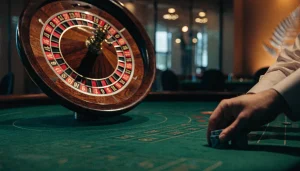
On screen, the table usually presents a numbered grid beside or below a wheel graphic. The layout helps you see the available numbers and the broad areas where bets can be placed. A live stream may show the physical wheel while the digital table remains visible, so you can follow both the action and the interface. The exact arrangement, camera view and controls depend on the particular game. A French Roulette online game should therefore be read from its own displayed rules and table, rather than assumed to match another version simply because both carry the same name.
The single zero is the key visual point to check when you want to distinguish this wheel from American Roulette, which has a different layout. European Roulette shares the French single-zero wheel arrangement, but it does not automatically share French Roulette’s special rules. A table’s name and the wheel image answer different questions: one indicates the variant being presented, and the other lets you inspect the wheel itself. If the rules matter to your decision, check the game information as well as the image.
Live French Roulette
Combines a real wheel via video feed with an on-screen betting interface and a live dealer.
Automated Version
Presents the wheel and round through software rather than a live dealer feed.
Mobile Display
Rearranges the wheel, table, and controls to fit a smaller screen without changing the game.
Live, automatic and screen-based versions
Live French Roulette generally combines a real wheel shown through a video feed with an on-screen betting interface. The dealer, camera angles, pace of the round and available interface tools can differ between games. Some presentations may make the wheel the main focus; others may give more screen space to the table. These are design choices, not reliable signs that the underlying rules have changed.
An automated version may present the wheel and round through software rather than a live dealer feed. “Automatic” describes how the game is presented or run; it does not by itself establish which French rules apply. Read the displayed game details before assuming that an automated table uses La Partage or En Prison, or that it handles the round in the same way as a live table.
The same point matters if you play on a phone rather than a desktop computer. A smaller screen may rearrange the wheel, table and controls, but a changed display does not necessarily mean a different game. Look for the wheel layout and the rules panel, and make sure the relevant information is readable before taking part. If controls are crowded or the rules are difficult to find, there is little reason to treat the interface as self-explanatory.
The table layout is a map, not a prediction tool. The wheel’s single-zero design identifies the basic French and European arrangement, while the game’s written rules establish which version you are actually viewing. Live presentation, automated play and mobile display can each look different without changing that distinction. Outcomes remain random, and every real-money bet can lose; do not risk more than you can afford to lose.

How French Roulette Bets Work When Zero Lands
A roulette bet starts with the kind of outcome you want to cover. An inside bet selects a number or a small group of numbers on the layout. An outside bet covers a broader category, such as red or black, odd or even, or a high or low range. Columns and dozens are also outside-bet choices. The distinction matters when zero appears: French Roulette’s La Partage and En Prison rules concern only even-money outside bets, not every wager on the table.
An even-money bet is one that would return winnings equal to the stake if it wins. Red or black is a familiar example. If you place such a bet and a colour other than the one you selected lands, the bet loses. If zero lands, the special French rules may change how that bet is settled. They do not turn a losing number bet into a partially winning one.
What La Partage does
La Partage means “sharing”. When zero lands, the dealer returns half the stake on an eligible even-money outside bet and collects the other half. So if your selection was red and zero appears, you do not receive the full stake back, but you do not lose all of it either. The return is limited to half the original stake.
This treatment applies to the qualifying outside bet only. A wager on a single number, a group of numbers, a column or a dozen does not receive the La Partage settlement described here. If you have placed more than one bet, assess each separately: an eligible even-money outside bet can be treated differently from your other wagers on the same spin.
La Partage Process
-
1
Place an even-money bet
You place a wager on an eligible outside bet, such as red or black.
-
2
Spin the wheel
The ball lands on the green zero.
-
3
Receive partial return
The dealer returns half of your original stake and collects the other half.
What En Prison does
En Prison means “in prison”. Instead of returning part of the stake immediately when zero lands, the table carries the eligible even-money outside bet forward to the next spin. The stake remains unresolved while that next outcome is determined.
If the carried bet wins on the next spin, the original stake is returned, but there are no additional winnings. If it loses, the stake is collected. This is not the same settlement as La Partage: one returns half the stake at once, while the other leaves the whole stake subject to the next spin.
The rule applies only to even-money outside bets affected by zero. It does not mean that all bets are held, and it does not provide another chance for an inside bet. How the table handles an eligible bet should be stated in its rules; do not assume that every French-labelled game uses the same settlement option.
Before placing a bet
To learn how French bets work, follow a wager from placement through settlement. Note whether it is inside or outside, whether it is an even-money selection, and what the table says will happen if zero lands. If the screen uses French terminology, La Partage is the half-stake return and En Prison is the carry-forward treatment described above. The labels are useful only when the rule behind them is clear.
European Roulette and French Roulette share a single-zero layout, but the French rules can affect how eligible even-money bets are settled. The wheel alone therefore does not tell you which zero rule is in force. Check the game’s displayed rules before staking money, particularly if the table offers a choice between La Partage and En Prison or does not make its zero procedure clear.
No betting pattern changes what a particular spin will land on. Every real-money bet can lose, and you should not risk more than you can afford to lose. A system that changes bet size may alter the sequence of stakes, but it cannot ensure a winning result or remove the uncertainty of the next spin.
French Roulette Probability and the Limits of Strategy
French Roulette can have a lower house edge than a standard single-zero game, but the difference depends on the table’s rules and the bets you make. When La Partage or En Prison applies, the house edge is 1.35% for eligible even-money bets. That figure describes the game’s long-run mathematical advantage over those bets; it is not a measure of what you will lose in a particular session, nor a promise of a return.
The rules matter because the reduced edge is conditional. La Partage and En Prison apply to even-money outside bets when zero lands. They do not change the house edge on every type of wager at the table. If you are assessing French Roulette probability, check that the special rule is in force and consider whether your bet qualifies. A French label by itself is not enough to establish how a particular table settles bets.
A lower house edge changes the expected balance over many wagers, not the uncertainty of an individual spin. A bet can win or lose, and a run of outcomes can differ sharply from the long-run expectation. The mathematical advantage is small enough to be easy to overlook in a short session, but it remains in place over time. More play does not make the game fair to the player; it gives the underlying probabilities more opportunities to take effect.
No French Roulette strategy can remove that edge. Changing stake sizes, alternating colours, or following a pattern may alter the shape of your wins and losses, but it does not alter the wheel’s probabilities. A staking plan cannot turn a negative expectation into a reliable profit. Nor does covering more outcomes guarantee a win: each wager still carries risk, and a larger number of bets can mean more money exposed.
Past results are not a forecast. Roulette spins are independent, so the outcome of one spin does not affect the probability of outcomes on the next. If a colour or number has appeared repeatedly, that history does not make another result more or less likely on the coming spin. A French Roulette table may display recent results, but the display records what has happened; it does not give you an advantage in predicting what comes next.
This distinction is useful when deciding how to use a strategy. Treat it as a way to organise your play, not as a method for controlling random outcomes. Set a limit you can afford to lose before playing, and stop when you reach it. The reduced house edge under the special rules is a genuine mathematical feature, but it is not a safeguard against losing a bet or a session.
French Versus American Roulette: The Extra Zero Matters
French Roulette and American Roulette differ most clearly in the wheel: the American version has an extra pocket, and that changes the odds attached to the game.
French Roulette uses the same single-zero layout as European Roulette. That wheel has 37 pockets: one green zero and 36 numbered pockets. American Roulette has 38 pockets, with both a zero and a double zero alongside the numbered pockets. With more pockets that can defeat a standard outside bet, the American layout carries a higher house edge.
For European Roulette, the house edge is 2.70%. For American Roulette, it is 5.26%. The difference comes from the extra zero, not from a change in the basic idea of the game. French Roulette shares the European wheel layout, but its special rules can affect eligible even-money bets when zero lands. Those rules do not turn it into a different wheel or make every French bet behave differently from its European counterpart.
That distinction matters when you compare game labels. A table described as American Roulette should not be assumed to offer French rules just because both games may display outside bets such as red or black. In particular, a half-stake return on zero is not a standard American Roulette feature.
French Roulette
Uses a single-zero wheel (37 pockets) and may feature La Partage or En Prison rules.
European Roulette
Uses a single-zero wheel (37 pockets) but does not automatically include French special rules.
American Roulette
Uses a double-zero wheel (38 pockets), resulting in a higher house edge of 5.26%.
A specialist review has described some Atlantic City American tables that return half the stake on even-money bets when either zero or double zero lands. That is a report about certain tables, not a general rule for American Roulette. Check the rules shown for the specific game before treating a partial return as part of its settlement. Otherwise, the double zero may cost more than a player expects.
For a straightforward comparison, start with the wheel and its stated house edge, then read the table rules separately. French Roulette’s single-zero wheel matches European Roulette’s layout; the American wheel has the additional double zero. Any special treatment of zero on an American table needs to be confirmed for that table, rather than inferred from a name or from a rule used in French Roulette.
Neither layout makes results predictable: each spin is random, and a bet can lose. If you choose to play, do not risk more than you can afford to lose.
French Roulette Payouts and What the Percentages Tell You
A roulette payout percentage is a theoretical measure of how much of the money staked is returned to players across a very large number of bets. It is not a forecast for a session or a promise about what an individual player will get back. The house edge describes the casino’s corresponding mathematical advantage; the two figures express the same underlying cost from different sides.
A specialist review reports payout percentages of 94.70% for American Roulette and 97.30% for European Roulette. Treat those as figures reported by that review, rather than universal values for every table: the rules attached to a game matter. A percentage without its rules and source can make unlike games look directly comparable.
French Roulette uses a single-zero wheel, as European Roulette does, but its special rules can change the return on eligible even-money bets. These are bets such as red or black, odd or even, and high or low. When La Partage or En Prison applies, the house edge on those bets falls to 1.35%. That is why French Roulette offers the best odds for even-money bets among these roulette formats.
The improvement is conditional, not a general increase to every payout. La Partage and En Prison apply only to even-money outside bets when zero lands; they do not alter the settlement of other bet types. Nor does a more favourable theoretical figure mean a particular bet is likely to win. It describes the effect of the rules over repeated play, not the result of the next spin.
When you compare a French Roulette payout with another table’s advertised percentage, check what the number covers. Is it a theoretical return for the game as a whole, or does it describe a specific bet under a specific rule? Does the table actually apply La Partage or En Prison? The label “French Roulette” alone is not enough to answer the last question.
- Confirm the wheel is a single-zero layout
- Check if La Partage or En Prison is enabled
- Verify the specific payout percentage for your bet type
- Read the rules panel to ensure the French label is supported by mechanics
If you play French Roulette for fun, the percentage is useful as a way to understand the cost built into the rules, not as a reason to expect a return. Read the table rules before staking money, and do not risk more than you can afford to lose. Every real-money bet can lose, even where a rule gives an eligible bet a better mathematical position.
French Roulette Call Bets Follow the Wheel, Not the Layout
A call bet is a group of roulette numbers selected because of where they sit in relation to one another on the wheel. That is different from choosing numbers by their printed positions on the betting layout. The distinction matters because the wheel and the table arrange the same numbers in different ways.
In French Roulette, a call bet refers to a wheel-based grouping. It does not mean that the numbers are beside one another on the felt, or that they share a colour or other table position. If you are looking at a live game, use the game’s own explanation of each available call rather than trying to infer its coverage from the layout alone. The names and presentation can vary between games, so the label should be checked before you confirm a wager.
This is one answer to what French Roulette is: a single-zero roulette variant with the same wheel arrangement as European Roulette, alongside French rules such as La Partage. The special rule is exclusive to French Roulette. Its presence does not turn every kind of wager into a French call bet, nor does it make wheel-based calls identical to outside bets. The grouping determines which numbers a call covers; the rule concerns how an eligible bet is treated when zero appears. Those are separate parts of the game.
A practical tip is to pause over the displayed selection before placing a call. Check that the chosen group is described as a wheel-based bet and that the selected numbers match what you intended. If the interface is unclear, ask the dealer or consult the game’s rules rather than guessing from where numbers appear on the table. A dealer can clarify how the game labels a bet, but that does not make a prediction more reliable or alter the random outcome of a spin.
The word “call” can sound as though a player must announce a phrase aloud. In an online game, the available interface may instead present the options for selection; the exact method depends on the game. Avoid assuming that every table offers the same call bets or uses the same controls.
Dealer tips are separate from roulette wagers. A tip does not change which numbers a call covers or improve its chance of winning. Keep the distinction clear: wheel position defines the grouping, the table is where bets are displayed, and French Roulette’s exclusive La Partage rule is a separate feature of the variant.
French Roulette or Blackjack: What You Can—and Cannot—Compare
If you are looking for the smallest house edge, French Roulette has a measurable advantage for eligible even-money bets when La Partage or En Prison applies. Under those rules, its house edge is 1.35%. That figure gives you a specific point of comparison; it does not establish that French Roulette has a lower edge than every blackjack game.
A fair comparison needs matching details. Roulette’s stated edge depends on the game’s rules and the kind of bet being considered. A blackjack figure would also need to identify the table rules and the assumptions behind the calculation. Without those details, saying that blackjack has the smaller edge—or that French Roulette does—is not a reliable comparison. The game name alone does not settle it.
The practical distinction is that French Roulette’s stated advantage is tied to a defined set of conditions: the special zero rules apply to even-money outside bets. They do not change every bet at the table. So a figure for those eligible bets should not be treated as the edge for every way of playing French Roulette.
This also puts claims about the “smallest edge” in perspective. The 1.35% figure is useful when you are comparing eligible French Roulette bets under those rules. It is not a promise of a particular result, nor does it predict what will happen in a session. Roulette outcomes are random, and each real-money bet can lose. Past results do not make a future result more likely.
For blackjack, look for a stated house edge that clearly explains the rules and assumptions used. If those are not provided, the number may not be comparable with the French Roulette figure. A casino’s general description of a game is not enough to establish which offers the better odds.
Bonuses can also complicate comparisons between casinos. Read the conditions before accepting one: bonus money must be wagered 50X within 30 days, and winnings from free spins must be wagered 50X within 7 days. A withdrawal request voids active or pending bonuses. These terms affect whether a promotion suits you; they do not change the underlying odds of a roulette bet. Do not risk more than you can afford to lose.
French Roulette Gold Live: Check the Rules Behind the Name
“Gold” is a product label, not a rule of roulette. It does not, by itself, tell you which wheel is used, how bets are settled or whether a table offers the features associated with French Roulette. The live format also does not establish those details: the game’s displayed rules are what matter.
To identify a French Roulette table, check that it uses a single-zero wheel and look for the rules that distinguish it from standard European Roulette. French Roulette shares European Roulette’s single-zero layout, but can include La Partage and En Prison. Do not assume either rule applies just because “French” appears in a title. Check the table information or rules panel for the actual conditions.
The distinction matters when zero appears. La Partage and En Prison concern eligible even-money outside bets; they do not change every bet on the table. If the rules are not clearly stated before you play, the name alone is not enough to establish how a stake will be handled. A gold-themed interface, dealer presentation or branding is not evidence of a different probability or a more favourable outcome.
If you are considering French Roulette Gold Live, read the game’s own description and confirm the wheel and settlement rules in the live table. Providers and platforms can use similar names for different presentations, so avoid relying on a search result, thumbnail or promotional label as a substitute for the rules shown in the game. Check whether the title refers to the French single-zero version and whether La Partage or En Prison is actually enabled.
Those checks identify the game’s mechanics; they cannot make a spin predictable. Roulette outcomes are random, and every real-money bet can lose. Do not risk more than you can afford to lose.
Casino Games in New Zealand: Rules and Options
Content created by the «casinotipsnz.com» team