
Know What a Slot’s Format Means Before You Play
 Available in US
Three-reel layouts, changing reel symbols and jackpot pools shape how slot games look and play, while free play has distinct limits.

How Slot Games Differ From One Another
Pokies can look similar at a glance, but their layouts and win structures can be quite different. A classic three-reel game keeps its format simple; a Megaways game changes the number of symbols shown on its reels; and a progressive jackpot game is defined by a prize pool that grows across participating casinos. Those differences affect what you see on a spin and what the game is built around. They matter whether you are browsing free slot machine games or trying to understand a game before playing it.
Classic three-reel pokies
The defining feature of a classic pokie is its three reels. That compact layout gives the game a more traditional appearance than formats with more reels and added features. The symbols and their positions are presented in a straightforward arrangement, so the basic structure is easy to take in.
Classic games also tend to have a different payout pattern from high-volatility titles: they typically produce smaller wins more often. That is a general distinction, not a promise about any particular session. It describes the kind of pattern associated with the format, rather than guaranteeing that a win will appear at any particular point.
If you’re looking for free slot machines in New Zealand in 2026, use this list as a starting point and check each casino’s own site to confirm whether free play is available. The details below highlight only the information provided for each operator.
-
BitStarz
- License
- Curaçao Gaming Authority, licence no. OGL/2024/165/0185
BitStarz is listed with a Curaçao Gaming Authority licence, no. OGL/2024/165/0185. This detail does not confirm whether free slot play is available.
-
Wintino
- Payout speed
- 1-3 business days
Wintino’s listed payout speed is 1–3 business days. The supplied details do not specify whether it offers free slot play.
-
Ricky Casino
- License
- Tobique Gaming Commission, licence no. 0000002
Ricky Casino is listed with a Tobique Gaming Commission licence, no. 0000002. The supplied details do not confirm free slot availability.
-
7Bit Casino
- License
- Tobique Gaming Commission, licence no. 0000091
7Bit Casino is listed with a Tobique Gaming Commission licence, no. 0000091. The supplied details do not confirm free slot availability.
-
Zotabet
- License
- 07017519840
- Payout speed
- 1-3 business days
Zotabet has the listed identifier 07017519840 and a payout speed of 1–3 business days. The supplied details do not specify whether free slot play is available.
-
N1 Casino
- License
- Malta Gaming Authority, licence no. MGA/B2C/394/2017
N1 Casino is listed with a Malta Gaming Authority licence, no. MGA/B2C/394/2017. This detail does not confirm whether free slot play is available.
-
Neospin
- License
- Tobique Gaming Commission, licence no. 0000064
Neospin is listed with a Tobique Gaming Commission licence, no. 0000064. The supplied details do not confirm free slot availability.
-
Lamabet
- Payout speed
- 1-3 business days
Lamabet’s listed payout speed is 1–3 business days. The supplied details do not specify whether free slot play is available.
-
Play Grand
- License
- Malta Gaming Authority, licence no. MGA/B2C/370/2017
Play Grand is listed with a Malta Gaming Authority licence, no. MGA/B2C/370/2017. This detail does not confirm whether free slot play is available.
For someone exploring free casino slot machine games for fun, this makes the classic format an easy one to recognise. Its appeal is largely in the uncomplicated layout and familiar feel, rather than in a changing reel structure or a jackpot shared across casinos. The limited reel count does not, by itself, tell you everything about a game, but it does identify the basic format.
Megaways games
Megaways games use a changing reel arrangement. The number of symbols displayed on each reel can vary from spin to spin, so the visible layout is not fixed in the same way as a classic three-reel game. A new spin can therefore present a different arrangement and a different number of possible winning ways.
Some Megaways titles can offer as many as 117,649 ways to win on a single spin. That figure belongs to some games in the format, not every Megaways title. The central idea is the changing number of symbols on the reels: more possible positions can create a large number of ways for symbols to form wins.
This is a structural difference, not simply a matter of putting more reels on screen. With a fixed layout, the arrangement stays recognisable from spin to spin; with Megaways, the number of symbols on individual reels changes. If you are comparing free games slot machines, that distinction can help explain why one game feels visually busier than another, even before you look at its other features.
The term “ways to win” describes possible symbol combinations across the reels. It should not be read as a count of guaranteed wins or as a statement about how often a game pays. The changing layout gives the game its particular structure, while the number of ways is a measure of the combinations available on a spin.

Progressive jackpot games
A progressive jackpot game is organised around a prize pool that grows as people spin. Each spin made across casinos running the game contributes to the shared pot. The pool is therefore not confined to one player’s session or to one casino’s version of the game.
That shared structure is what distinguishes a progressive jackpot from the reel formats above. “Three-reel” describes a layout; “Megaways” describes reels whose symbol counts can change; “progressive” describes how a jackpot pot is funded. A progressive game may still have reels and other familiar slot elements, but its defining feature is the linked prize pool.
This distinction is useful when comparing games that appear similar on screen. Two pokies may both use reels, yet one could be a classic format, another could use Megaways, and one could be connected to a progressive jackpot. These labels describe different aspects of a game and are not necessarily mutually exclusive. Looking at the layout tells you how the reels are arranged; looking for a progressive jackpot tells you whether spins feed a shared pot.
What the formats tell you
A quick way to sort these games is to ask what the label describes. A classic pokie is identified by its three-reel layout and its tendency toward smaller, more frequent wins compared with high-volatility titles. Megaways is identified by changing symbol counts on the reels and the resulting number of possible ways to win. A progressive jackpot is identified by a pot that receives contributions from spins across casinos running the game.
Classic Three-Reel
Defined by a compact three-reel layout and a tendency toward smaller, more frequent wins.
Megaways
Features a changing reel arrangement with varying symbol counts and a large number of ways to win.
Progressive Jackpot
Organised around a shared prize pool that grows with every spin across participating casinos.
These labels help make sense of the range of free casino slot machine games, but they do not make every title within a format identical. The reel arrangement, changing symbol count or shared jackpot describes one important part of a game’s structure. It does not, on its own, tell you how a particular session will go.
Browser Play or a Downloaded Casino Client?
The practical difference is where the casino software runs. With a web-based casino, you use a browser and do not download casino software to your computer. With a download-based casino, you first install a software client; that client is required to play and wager.
That distinction can sound minor, but it changes the first step in getting to a game. Browser play means opening the casino’s website and using its web interface. A downloaded casino requires an installation before you can use its games. If you are choosing between the two, the central question is whether you want to use a site through a browser or install a separate client.
What browser play involves
A browser-based casino provides access to games through its website, without requiring casino software to be installed on your local computer. That may suit you if you do not want a separate casino application on the device you are using. You can go straight to the site rather than first locating, downloading and installing a client.
This describes the software access method, not what the casino offers once you arrive. “Play in a browser” does not, by itself, tell you whether a particular game has a free-play mode, whether you need an account, or what conditions apply to playing. Those are separate details to check for the specific casino and game.

Likewise, the phrase “no download” refers to the casino software, not to a downloadable game file. In this context, browser-based play means accessing casino games on the website rather than installing a casino client. If you are looking for a way to try a slot-style game without installing software, the browser route is the relevant access format; whether the game can be played without wagering depends on its separate play options.
What a downloaded client involves
A download-based casino works differently: you need to download its software client to play and wager. The client is the required access point, rather than the casino operating through the website alone. So the decision is not simply between two ways of opening the same page. One method requires an installation; the other does not require casino software on your computer.
Before choosing a download-based option, make sure you understand that installing the client is part of the process, not an optional extra. If you would rather not install casino software, a download-based service does not match that preference. If you are comfortable installing a client, the key point is still that the software must be downloaded before you can play and wager.
“Free download” can be an ambiguous phrase. It may refer to the cost of downloading software, but it does not establish that play itself is free. Similarly, a browser game is not automatically a free game simply because there is no casino client to install. The installation question and the cost or play mode are different questions, and the wording on a page should make clear which one it is answering.
Do
- Use browser play if you prefer not to install software
- Install a client if you prefer a download-based casino
- Check specific site terms for free-play options
Don't
- Assume "no download" means the game is free
- Assume a "free download" guarantees free play
- Treat a download link as equivalent to browser access
How to compare the access options
Start with the device you intend to use and the action you are willing to take. If you do not want to install casino software, look for a web-based option that runs through a browser. If the casino requires a client, expect to download and install it before play. Do not treat a website link to a download as equivalent to opening a game in the browser: one leads to software that must be installed, while the other is browser access.
It can also help to read the casino’s instructions carefully before proceeding. The words “online,” “free” and “download” do not all describe the same thing. “Online” identifies access over the internet; “download” signals that a client is required; and “free” needs to be understood in relation to the particular game or offer. A page using one of these terms does not answer the others automatically.
If your main aim is to open a game without installing anything, focus on whether the casino is web-based. If you see a requirement to download a client, that is a different access model, even if the casino also has a website. The useful distinction is straightforward: browser casinos let you play without downloading software to your computer, while download-based casinos require a client to play and wager. That tells you how you will access the games, not whether a particular session is free.

What New Zealand’s 2026 Licensing Shift Means for Online Casinos
New Zealand’s online casino rules are changing, but the change is not simply a matter of every website displaying a new licence. The Gambling Act 2003 has prohibited online casinos from being based in New Zealand. Its focus has been on operators running casinos from within the country, rather than on punishing people who play. That distinction matters if you are considering free pokies or other online casino games: the rules governing a provider and the position of an individual player are not the same.
The Online Casino Gambling Act 2026 now provides a framework for domestic licensing. It came into force on 1 May 2026, establishing New Zealand’s first licensing system for online casino gambling. The Department of Internal Affairs is responsible for regulating that system. The change is intended to bring online casino providers under domestic oversight, where previously online gambling supplied from overseas was not licensed or supervised by a New Zealand regulator.
There is a transition before the full system is operating. Casinos that were already serving New Zealand customers before the new Act took effect may continue during that transition, which runs from 1 May to 1 December 2026. That permission is limited: it does not open the door for new providers to begin serving customers under the transitional arrangement. The full licensed regime is not expected to be fully operational until 2027, and unlicensed operation is expected to become an offence around the middle of that year.
The planned system is also limited in scale at the outset. Government licensing plans describe an initial allowance of up to 15 online casino licences. That is a cap on the number of licences envisaged at the beginning, not a statement that every casino currently reachable from New Zealand is licensed, or that all providers will qualify. A website’s accessibility to customers does not, by itself, establish its regulatory status.
That is a significant difference from the earlier position. Before the 2026 Act, overseas casino services did not have New Zealand licensing or supervision. A customer who wagered on an offshore site during that period had no domestic government recourse if a dispute arose. The new framework is meant to create local oversight, but the transition means that the change is happening in stages rather than instantly.
For players, the Gambling Act 2003’s focus on operators means that its prohibition on domestic online casinos should not be read as a claim that a person is committing an offence simply by playing at an overseas site. At the same time, the absence of local supervision in the earlier system had a practical consequence: a New Zealand regulator could not provide the domestic recourse available within a regulated system. The legal position of an operator and the protections available to a customer are separate questions.
If you are looking at free casino pokies in 2026, it is useful to distinguish free-play access from legal status. A free-play screen does not tell you whether a provider falls within the transitional rules or will be licensed under the new regime. Nor does the phrase “free spins” establish that a site is authorised to operate in New Zealand. The regulatory question concerns the provider and its status, not whether a particular session involves a cash stake.
The licensing transition also does not turn the new framework into a reason to treat all accessible sites as approved. During the interim period, only providers that were already operating in New Zealand before 1 May 2026 may continue under the transitional provisions, and the full licensing regime is still being put in place. Readers should also remember that gambling is intended for adults; operators entering the licensed system are expected to use stricter age and identity checks.

The central change, then, is the move from a market without domestic online casino supervision to a staged licensing regime overseen by the Department of Internal Affairs. The 2026 transition sets boundaries on who may continue in the interim, while the fully operational system is expected later. For anyone comparing online pokies, that timeline is more informative than the mere fact that a website can be opened.
What Happens When You Spin a Slot?
A spin may look like a set of symbols stopping on reels, but a virtual pokie’s result is determined by software. The central component is a pseudorandom number generator, or PRNG: a program that produces a sequence of numbers designed to appear random. The game uses that process to determine the outcome shown on screen.
“Pseudorandom” does not mean that the game is choosing a result because of what happened in the last spin. It describes how the software generates its sequence. The display then presents the result as symbols and animations. Those visuals make the spin easy to follow, but they do not provide a clue about what the next result will be.
The important point is that spins are independent. Each one is a separate result, not a step towards correcting a previous outcome. A run of losses does not make a win more likely on the next spin, and a recent win does not mean another one is less likely. The game is not keeping a balance sheet that it has to settle with you.
That can be difficult to accept during play because people naturally look for patterns. If several spins have shown similar symbols, it can feel as though a particular result is approaching. But the sequence you have just seen does not make the next spin “due” to pay. A streak is a description of past results, not a signal about what comes next.
The same applies to a pause or a change in how you play. Stopping for a while, switching screens or returning later does not make the game owe you a win. Nor does clicking quickly or slowly turn the previous results into a prediction. The outcome is determined for each spin through the PRNG, rather than by a player’s sense of timing.
This distinction matters when you try free play. A no-cash session can show you how a game behaves on screen and let you practise using its controls. It cannot reveal the next result or prove that a particular sequence is about to happen. If a demo produces several wins close together, that is still a run of independent outcomes—not evidence that the game has entered a winning phase.
Likewise, a stretch without a win in free play does not mean that a paid spin would be more likely to succeed. Treating practice results as a forecast can encourage misplaced confidence when moving between play modes. The appearance of the game may stay the same, but the results you have already seen do not predict future spins.
It helps to separate what you can observe from what you cannot infer. You can see the symbols displayed, the result of a spin and the game’s presentation. You cannot read the next result from a sequence of earlier spins. A dramatic animation may make a result feel significant, but it does not change the independence of the next spin.

This is also why keeping track of past outcomes is not a reliable strategy for identifying a machine that is ready to pay. Notes about a run can tell you what happened; they cannot establish what must happen next. The practical approach is to regard each spin as uncertain and avoid making decisions on the assumption that losses will soon be repaid.
When you play free slot machines online, the most useful thing to learn is therefore how the game presents its results, not how to predict them. The PRNG determines outcomes, and every spin stands on its own. A game has no memory in the sense players often hope it does, and no sequence of ordinary results makes a win owed.
What “Free” Means in Slot Play
“Free” describes the way you play, not what a game is expected to return. A free-play session lets you try a pokie without staking your own cash. RTP, by contrast, is a measure of a game’s theoretical return over its entire lifetime. The two terms answer different questions: one concerns whether you are risking money in a session; the other describes the game’s long-run payout rate.
RTP stands for Return to Player. It is expressed as a percentage of the total amount wagered that a game pays back across its lifetime. It is not a forecast for your next session, nor a promise that you will receive a particular share of what you stake. Your results over a short period can differ substantially from that long-run figure. A game’s RTP does not tell you what will happen during a brief spell of play.
What is RTP?
Return to Player (RTP) is a percentage of the total amount wagered that a game pays back across its entire lifetime. It is a long-run theoretical measure, not a forecast for an individual session.
That distinction matters when you are trying a free slot machine. A displayed RTP may describe the game’s long-term design, but it does not turn practice play into a cash return. Nor does playing without a cash stake change the meaning of the RTP figure. You are simply using a different mode of play, with no personal cash wager at risk in that session.
The word “free” can also be easy to misread. It does not mean that every possible way to play a game is cost-free, or that a game will award money. It refers to a session in which you are not staking your own cash. Treat it as a way to become familiar with a game’s layout and features, not as evidence that the game will pay you or that a later paid session will follow the same pattern.
If a casino publishes an RTP figure or an audit, read what the information actually covers. Some online casinos make payout-percentage audits available on their websites, but a published figure still describes long-term performance, not an individual player’s result. It cannot tell you whether you will win, how much you might win, or how long a session will last.
Before starting, decide whether you are playing without a cash stake or wagering real money. If you choose to gamble, set a maximum loss limit before you begin and stop when you reach it. Do not treat RTP as a reason to keep playing, raise your stake or try to recover losses. You must also meet New Zealand’s minimum legal age requirement for gambling.
In short, a free session concerns the cost of taking part; RTP concerns a game’s lifetime payout measure. Keeping those meanings separate helps prevent a long-term statistic from being mistaken for a personal promise.
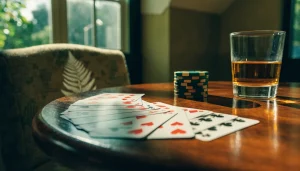
A Fun Session Still Has Different Risk Patterns
A free-play session can feel lively or uneventful even when you are not staking cash. One reason is volatility: the pattern of payouts a game tends to produce. Low-volatility pokies return smaller amounts more regularly. High-volatility games can leave longer quiet stretches, with larger payouts when wins arrive. That difference shapes the rhythm of play, not a promise about what will happen in your next session.
With a low-volatility game, smaller wins may appear often enough to keep the screen active. That can make the session feel steady, but frequent payouts do not mean every spin wins or that the total balance will rise. In free play, the effect is mainly on the pace and feel of the session: you may see more modest returns rather than long gaps between them.
A high-volatility game can feel less active. You may go through a longer run without a notable payout, then see a larger one. The possibility of a bigger win does not make one due, and it does not tell you when it might happen. A quiet stretch is part of the pattern, not evidence that the game is storing up a result for you.
This distinction can help when choosing free slot machine games for fun. If you prefer a session with more frequent, smaller returns, a low-volatility title may suit that preference. If you are comfortable with a stop-start rhythm and would rather see the possibility of larger payouts, a high-volatility game may be more appealing. Neither style is inherently better; they simply deliver different experiences.
Treat those descriptions as broad tendencies, not forecasts. Volatility cannot tell you the outcome of a particular spin or guarantee that a session will match the pattern. A high-volatility game can produce a win early, and a low-volatility one can still have quiet spells. The labels describe how payouts are distributed over play, not a schedule you can follow.
Free slot machines to play for fun can therefore vary in feel even when you are only trying out the games. Pay attention to whether the pace suits you rather than treating a string of small wins as proof that a game is generous, or a run without wins as a reason to keep going. The interface can make play feel continuous; that does not change the underlying uncertainty.
If you move from free play to wagering, the same patterns matter in a different way because real money is at stake. Set a maximum loss limit before you begin, and stop when you reach it. Do not raise your stake or continue to recover losses. Choosing a lower-volatility game does not remove the risk of losing money, while choosing a higher-volatility game does not make a larger payout more likely on demand. For entertainment, the useful question is whether the pace remains enjoyable without pushing you beyond the limit you set.
Bonus Rounds and the Cost of Buying In
A bonus buy is an option to pay a set multiple of your stake to enter a slot’s bonus round directly, rather than waiting for the feature to trigger during ordinary play. It changes when you reach the round; it does not make the entry free. A game that offers bonus rounds can still be tried without paying only where a free-play mode is available, and that mode is separate from buying a feature with a stake.
The price is tied to the stake you have selected, so the same multiplier represents a different cash cost at different stake levels. A specialist review reports bonus-buy prices ranging from 50x to 100x the stake, depending on the game. Treat that as a reported range, not a universal price list: the feature and its cost can vary between titles. Check the game’s displayed terms before selecting it, including whether the price is shown clearly before confirmation.
The shortcut also skips the part of play in which you wait for a bonus round to appear. That may sound appealing if the feature is what interests you, but paying more to reach it does not ensure a particular result or make the round profitable. The purchase is still a stake placed on a game outcome, not a guaranteed return.
If you are exploring free slot machines with bonus rounds, keep the distinction between a free session and a bonus buy clear. In a free session, you can explore how a game’s features work without paying for each entry; a bonus buy, by contrast, is a paid choice. A bonus round reached through that option is not the same as simply seeing a feature during free play.
Before using a buy option, consider whether its displayed cost fits the limit you set for the session. If the price is unclear, or you cannot tell what the multiplier applies to, do not confirm the purchase. The feature is optional; leaving it alone is also a way to play the game.
Free Spins: A Feature, Not a Cash Guarantee
Free spins are a feature in video pokies, which typically have five reels and may also include wilds and scatters. The name describes the feature: the game allows additional spins under its rules without charging a separate stake for each one. It does not promise that those spins will produce a win.
That distinction matters when you are choosing a game to try. A free-spins feature tells you something about what the game can include, not what a particular session will return. The spins may add activity and variety, but they are still part of the game rather than a guaranteed cash award.
Check how a particular pokie describes its free spins before playing. The feature’s rules determine how it works, and details can differ between games. Do not assume that seeing “free spins” means you have received withdrawable money, or that every spin will pay. A feature can be present without producing a cash result.
If you are playing without staking money, treat free spins as a way to experience part of the game, not as income. If money is involved, keep the distinction clear: the feature may offer extra play, but it cannot promise a return. Adults only.
Playing in a Browser Without Installing Software
A browser-based pokie runs through a website rather than a casino program installed on your computer. You open the site in a browser and can play its games without downloading software to your device. That may suit you if you do not want an extra application taking up space or prefer not to install casino software.
A downloaded casino client works differently: you first install the operator’s program, then use it to access games. Browser play avoids that installation step, but it does not make every other condition disappear. A site may have its own rules for accounts or access, so check those before you start. “No download” describes how the game reaches your device; it does not, by itself, promise anonymous play or remove a site’s requirements.
The distinction is about software, not the game’s cost or whether a session uses real money. A pokie opened in a browser might offer a practice mode or a cash-play option, depending on the site and game. Read the on-screen description so you know which mode you have opened. Do not assume that a browser game is free to play simply because nothing was installed.
If you choose to gamble, you must meet New Zealand’s legal minimum age. Set a maximum loss limit before starting, and stop when you reach it. Free slot games may be available in a browser without a software download, but registration requirements are a separate matter: check the individual site rather than treating “no download” as “no account”.
Can a Free Slot Session Pay Real Money?
A free demo session is for trying a game, not earning a cash balance. It lets you see how the controls and features work without staking money, but any on-screen wins remain part of the practice mode. They do not become withdrawable funds simply because the game displays a prize.
That distinction matters if you are looking for free pokies that pay real money. A demo can show you what a game feels like, but it cannot establish what you would receive in paid play. Nor does a winning run in practice guarantee a similar result later; the two sessions are separate.
Progressive jackpots have a specific limitation: they do not pay out in demo mode. A jackpot meter or prize display may still appear while you explore the game, but it is not a claim on the shared pot. Treating a demo jackpot as cash would confuse a simulation with a real-money outcome.
Use practice play to learn the layout and mechanics, and keep its results separate from any later wagering. If you move from a demo to paid play, you are making a different decision with money at stake. Set a maximum loss limit before you begin, and do not treat practice wins as evidence that a paid session will produce income.
Casino Games in New Zealand: Rules and Options
Content created by the «casinotipsnz.com» team