
Build a slot plan around limits, not betting systems
 Available in US
Slot plans can shape spending and session length, but they do not establish a way to influence machine results.

What a Slot Strategy Can—and Cannot—Control
A slot strategy can sound like a set of instructions for improving your chances: choose a certain machine, follow a sequence, or change your play after a win or loss. The important distinction is between a plan for how you play and a method that changes the game’s results. Those are not the same thing.
For slot machines, there is no established strategy here that supports claims that a particular sequence, stake pattern, or choice of machine will make a result more likely. A method may give you rules to follow, but having rules does not show that they affect what the machine produces. Calling a system “best” or “high limit” does not supply that missing proof.
That matters whether you are looking for a simple approach or a more elaborate one. A plan labelled as a one-dollar strategy, a five-dollar strategy, or a progressive system may describe how someone chooses to play. The label alone cannot establish that it improves the odds. Nor does increasing or changing a stake turn a betting pattern into a way of controlling the outcome.
When you’re choosing slots for a strategy-focused session in New Zealand, it helps to check the limited, verifiable details available for each casino. Use this list as a starting point, and make your own decisions about how to play responsibly.
-
BitStarz
- License
- Curaçao Gaming Authority, licence no. OGL/2024/165/0185
BitStarz lists a Curaçao Gaming Authority licence, number OGL/2024/165/0185. You can use that detail as one point to consider when reviewing the casino.
-
Wintino
- Payout speed
- 1-3 business days
Wintino lists a payout speed of 1–3 business days. That gives you a stated timeframe to consider when planning withdrawals.
-
Ricky Casino
- License
- Tobique Gaming Commission, licence no. 0000002
Ricky Casino lists a Tobique Gaming Commission licence, number 0000002. You can consider this stated licensing detail when assessing the casino.
-
7Bit Casino
- License
- Tobique Gaming Commission, licence no. 0000091
7Bit Casino lists a Tobique Gaming Commission licence, number 0000091. This is the licensing information provided for you to take into account.
-
Zotabet
- License
- 07017519840
- Payout speed
- 1-3 business days
Zotabet lists licence number 07017519840 and a payout speed of 1–3 business days. You can consider both details when reviewing the casino and planning withdrawals.
-
N1 Casino
- License
- Malta Gaming Authority, licence no. MGA/B2C/394/2017
N1 Casino lists a Malta Gaming Authority licence, number MGA/B2C/394/2017. You can use this stated licence information as part of your review.
-
Neospin
- License
- Tobique Gaming Commission, licence no. 0000064
Neospin lists a Tobique Gaming Commission licence, number 0000064. This is a specific licensing detail for you to consider.
-
Lamabet
- Payout speed
- 1-3 business days
Lamabet lists a payout speed of 1–3 business days. You can factor that stated timeframe into your withdrawal plans.
-
Play Grand
- License
- Malta Gaming Authority, licence no. MGA/B2C/370/2017
Play Grand lists a Malta Gaming Authority licence, number MGA/B2C/370/2017. You can consider this stated licensing detail when reviewing the casino.
This is not a claim that every game in a casino works alike. It is a reason to keep advice tied to the game it actually addresses. Blackjack, for instance, has decisions that can be analysed in relation to the cards in your hand and the dealer’s visible card. A basic strategy chart can guide choices such as hitting, standing, doubling, or splitting. Its recommendations depend on the table rules, so you need to check the table rules before using one.
That kind of advice is specific: it connects a decision to a defined situation in a game. It does not provide evidence for a slot-machine method. A blackjack chart cannot tell you which slot to select or when a slot result is due, and card-counting instructions do not become slot guidance simply because both games are found in casinos. Similar vocabulary—strategy, odds, advantage—does not make the underlying games interchangeable.
The same care applies to claims about “hot” or “cold” machines, lucky timing, or a machine supposedly being ready to pay. Without evidence that a method affects the relevant results, these are beliefs or descriptions, not demonstrated strategies. A sequence that happened to precede a win does not, by itself, show that the sequence caused the win or can reliably be repeated. A winning outcome is not proof of a winning system.
It is also useful to ask what a proposed strategy is actually promising. If it offers a way to organise decisions, that may be a personal plan. If it claims to improve the chance of a particular result, the claim needs support specific to the slot game in question. If it says that changing your stake can recover losses or force a payout, caution is warranted: a confident name and a tidy progression are not evidence of control.
The word “strategy” can therefore refer to very different things. In blackjack, it can mean choices evaluated against known rules and game states. In slot play, a plan may instead describe a player’s preferences or habits. These should not be presented as equivalent. The first can be tied to particular decisions; the second does not establish that the machine will respond to the player’s pattern.
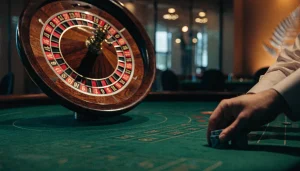
You can still decide what kind of play you are willing to take part in. But that is a decision about your own conduct, not proof of a slot-specific advantage. It helps to separate what you can choose from what a strategy claims to change. You can choose whether to play and how to approach a game; a slot strategy should not be treated as a reliable means of directing the machine’s results.
For a practical test, look past the label and ask what the method says it controls, how it supports that claim, and whether the reasoning applies to the game being discussed. If the explanation relies on a blackjack chart, a roulette statistic, or a story about a lucky sequence, it has not established a slot strategy. The game matters, and the evidence has to match it.
A careful account of strategy should say where its advice applies and where it stops. Blackjack decisions can be discussed in detail because they are linked to hands, dealer cards, and table rules. That does not turn those decisions into a general casino formula. For slots, claims of control should not outrun what can be shown.
Online Slots: Keep the Plan to Your Budget and Time
Online play makes it easy to move from one spin to the next without a natural pause. A screen can stay open while you check messages, switch games or return after a break. That convenience does not make a session easier to control. Before opening a slot, decide how much you are prepared to lose and how long you intend to play. Treat those decisions as boundaries, not as tools for improving the result.
A budget is an amount you can afford to lose without using money needed for ordinary expenses. Once you reach it, stop. Do not add funds to recover a loss or extend a session because a win seems close. Neither a new deposit nor a change in stake makes a previous result a reason to expect a particular next result. The practical value of a budget is that it limits what you put at risk; it does not make the game more predictable.

Set a time limit as well. Time can pass unnoticed when play is continuous, especially if you are switching between games or taking brief pauses without closing the session. Choose a stopping point before you begin and use a timer or another reminder if that helps. When it goes off, finish the session rather than renegotiating the limit in the moment. A time boundary is useful even when you are ahead: a favourable result is not a reason to assume that continuing will preserve it.
These limits answer a more useful question than “What is the best online slot strategy?” A plan for your money and time can shape your own behaviour, but it cannot establish a way to influence slot results. Selecting a certain theme, changing the stake after a loss or waiting for a particular sequence does not become a sound strategy merely because it feels systematic. A routine may make play feel more organised; that is different from changing what the game will do.
Keep the plan simple enough to follow. Decide in advance what counts as the end of the session: reaching the spending boundary, reaching the time boundary, or either one. If you have reached one limit, do not treat the other as permission to continue. For instance, having time left does not justify spending beyond your budget, and money remaining does not require you to use the entire session. Unspent funds and unused time are not failures of the plan.
It may help to avoid playing while distracted, tired or upset. Those states can make it harder to notice how long you have been playing or to stick to a decision made earlier. If you find yourself changing your limits during a session, take that as a reason to stop rather than as a reason to devise a more elaborate system. There is little value in a plan that becomes less binding precisely when you need it.
Some online features can make it easier to keep playing, so notice what is on the screen and what you are choosing. If an option speeds up play or removes a pause between spins, consider whether it makes it harder to stay aware of your time and spending. You do not need to use a feature simply because it is available. Keeping the session deliberate is more useful than adding extra steps that make the play feel like a method.
Do
- Decide on a loss limit before playing
- Set a clear stopping time
- Use a timer or reminder
- Stop when any limit is reached
Don't
- Add funds to recover losses
- Extend a session because a win seems close
- Renegotiate limits during play
- Play while distracted, tired or upset
Be wary of advice that presents a slot betting pattern as a route to winning. Increasing a stake after losses, changing it after a win or following a repeated sequence may change how quickly your balance moves, but it does not give you a verified way to control the result. A pattern can also encourage you to spend more than planned. If your aim is to keep play within bounds, use a fixed personal budget and time limit rather than a sequence that requires you to keep adjusting your wager.
For a beginner, the most useful preparation is not a complicated system. It is knowing what you can afford to lose, deciding when you will stop and being willing to follow that decision. If you cannot keep to those boundaries, do not continue the session. Online access makes it possible to return quickly; it does not make returning necessary. A controlled session is still gambling, and no plan can promise a win or remove the possibility of losing the money you set aside.

Playing and Wagering: Why a Betting Pattern Is Not a Strategy
A wagering pattern describes how you choose your stake. It does not, by itself, explain how a slot game determines results or show that changing your stake improves your expected return. That distinction matters: a neat sequence of bets can feel deliberate without providing evidence that it gives you an advantage.
Flat betting means keeping the stake the same from play to play. Increasing or reducing it according to a rule is another way to organise wagering. Either approach can shape how quickly you put money at risk, but a pattern is not proof of a better chance of winning. Without slot-specific evidence, it would be misleading to label any such sequence a reliable playing strategy.
The same caution applies to systems built around recent results. A player might raise a stake after a loss, lower it after a win, or follow a repeating sequence. Those rules tell you what to wager next; they do not establish that the next result is more likely to match the system. A rule can be consistent and still have no demonstrated effect on the game.
That is why a slot wagering strategy should not be judged by how systematic it sounds. Ask what the method is supposed to change. If the claim is that it produces a higher expected return, there should be slot-specific evidence supporting that claim. If the method only tells you when to increase, decrease, or hold a stake, it is a staking plan, not evidence of improved odds.
Be particularly wary of approaches that treat a run of losses as a reason to wager more. Raising stakes in response to losses can increase the amount exposed without establishing that a recovery is due. A recent result is not a guarantee about what follows, and no betting sequence can promise a winning session. Chasing losses turns a plan into pressure to keep playing, which is a poor basis for deciding what to stake.
Nor should blackjack guidance be carried over to slots simply because both games involve wagering. Blackjack advice about decisions such as hitting or standing concerns choices within that game and depends on its rules. It does not provide a slot betting system. A strategy needs to fit the game it describes; otherwise, familiar casino terminology can give unsupported advice an undeserved air of authority.
When assessing a proposed system, separate its measurable claim from its instructions. Does it offer evidence about slot-specific expected return, or merely prescribe a sequence of stakes? Does it explain what would count as proof that the method works, rather than pointing to a winning session? If those questions have no clear answers, treat the system as a personal betting pattern, not a tested advantage.
That does not mean every pattern is equally suitable for every player. A fixed stake may be easier to follow than a changing one, but simplicity is not evidence that it improves results. The useful distinction is between managing your own wagering and claiming control over outcomes. The first is a choice about your behaviour; the second requires evidence about the game.
A strategy for playing slots should not be sold as a way to beat the machine unless its claims can be substantiated for slots. A sequence of bets may look precise. Precision is not proof.
Slot Strategy Without a Promise of Control
“Strategy” can mean different things in a casino game. It may describe decisions a player makes, a way of organising a session, or a method claimed to improve results. Those meanings should not be treated as interchangeable. A plan for your own conduct is not, by itself, a way to direct what a slot machine produces.
The distinction matters because a confident label can make a routine seem more powerful than it is. A sequence of button presses, a preferred order of play or a rule for when to continue may give a session structure. That does not establish that the sequence affects the machine’s results. To call a method a slot strategy in the stronger sense, there would need to be reliable evidence that it changes outcomes. A name, a testimonial or a detailed set of instructions is not that evidence.
A practical way to assess any proposed method is to ask what it actually changes. Does it guide a choice that belongs to you, or does it claim to influence a result that you do not control? The first may be a personal routine. The second is a claim about how the game works and needs support specific to that game. Without such support, it is safer not to treat a routine as an advantage.

That does not make every personal plan pointless. A player may decide in advance what kind of experience they want, what will make them stop, or how they will respond if a session is not going as hoped. These are choices about participation, not instructions to the machine. Keeping that boundary clear helps prevent a plan from turning into a promise that results will follow.
Be cautious when advice presents a universal formula for slots. A rule that sounds precise can still be unsupported if it does not explain which game it applies to or why it should affect play. Terms such as “system” and “strategy” do not prove that a method works. Nor does a past result demonstrate that repeating the same actions will produce the same result again.
The broad idea of slot strategy is therefore best kept modest: it can refer to how you make decisions around playing, but it should not be taken to mean that you can command or predict results. A method may help you feel organised; that is different from showing that it changes the game. The distinction is less exciting than a promised formula, but it is more useful when deciding what to believe.
A sound standard is to separate observable instructions from claims about effects. You can see whether a routine asks you to make a particular choice. You cannot conclude from that alone that the choice improves the result. Any claim of influence needs evidence that is relevant to the particular game, rather than confidence in the person presenting the method.
So, treat “slot strategy” as a description that needs defining, not as proof of control. Ask what the strategy is meant to change, and whether that effect is demonstrated. If the answer amounts only to a pattern or a promise, there is no reason to assume it can determine what happens.
A New Zealand Player’s 2026 Reality Check
For New Zealanders, 2026 is a year of change in the legal framework for online casino gambling, not a year in which slot play acquired a distinct national strategy. A change in who may provide online casino services does not, by itself, give a player a method for influencing a slot’s results. The legal position and the way a game works are separate questions.

The Online Casino Gambling Act 2026 took effect on 1 May 2026. It created New Zealand’s first domestic licensing framework for online casino gambling, while setting a transition period for providers that were already serving people in the country. Those providers may continue operating during that period, which runs until 1 December 2026. The full licensing system is not expected to be operational until 2027.
That transition matters when you are trying to understand the market, but it does not identify a best strategy for slots. The Act concerns the provision of online casino gambling; it does not establish a New Zealand-specific way to choose spins or make a slot pay. A local date or legal category is not evidence that a particular playing approach improves results.
There is also a historical distinction. Before the new Act, offshore online casino gambling was not licensed or supervised by a New Zealand regulator. A customer who wagered with an offshore site during that period had no domestic government recourse. That is a material consideration about consumer protection, not a claim about how slot outcomes are generated.
The Gambling Act 2003 bars online casinos from being based in New Zealand. The 2026 framework changes the position for online casino providers through its transition and licensing provisions; it should not be read as proof that every site, or every slot strategy promoted online, has the same status or support. Nor does a local regulatory framework turn a betting pattern into a reliable method.
If you are assessing advice presented as the best strategy for New Zealand players, separate claims about the market from claims about gameplay. A date, a New Zealand audience label, or the word “strategy” does not show that a technique changes slot results. Treat the legal transition as context for understanding online casino services, not as a promise of better outcomes. The practical point is narrow but important: 2026 brings a new framework and a defined transition, while the framework itself supplies no special slot-playing formula.
A careful reader should also distinguish a rule governing providers from a rule governing players. The dates and transition provisions describe how the market is moving toward domestic licensing; they do not establish a slot-specific advantage for people living in New Zealand. Any claim that a local strategy reliably changes results needs support beyond its connection to the year or country.
Casino Strategy: Blackjack Rules Are Not Slot Rules
A casino strategy is only useful when it matches the game it is meant to guide. Blackjack decisions depend on the cards in your hand and the dealer’s up-card; slot play is not governed by those same decisions. So advice about one game should not be presented as a method for improving results in the other.
With optimal play, blackjack and video poker have the lowest house advantages among the games covered by this comparison. That finding is specific to those games and to using the right strategy for them. It does not establish a house advantage for slots, or show that a blackjack technique can change slot results.
The distinction matters because “casino strategy” can sound like one set of rules for every game. It is not. In blackjack, a player can make choices such as whether to hit or stand, and a strategy can guide those choices. Video poker also involves decisions about which cards to hold. A slot strategy cannot be inferred from either example merely because all are casino games.
For a slot player, that means blackjack charts, card-counting methods and advice about splitting pairs are not slot instructions. They concern blackjack decisions and should stay there. Applying them to a slot does not turn them into a way to control its outcome.
The same caution applies when someone compares games by house advantage. A lower house advantage for optimally played blackjack or video poker is not evidence that slots share those figures. Nor does it mean that a slot can be made equivalent to those games through a betting pattern or by borrowing a strategy from them.

When evaluating advice labelled as a casino slot strategy, look at what it actually explains. If it relies on blackjack rules, it is describing blackjack, not slots. If it claims that a general casino principle guarantees better slot results, the claim goes beyond what these game comparisons support. The label alone does not show that the advice applies.
This is not a reason to treat all casino games as interchangeable, or to assume that one strategy works wherever a casino offers a game. The practical question is whether the advice is tied to decisions that exist in the game you are playing. Blackjack guidance can be relevant to blackjack; it does not become slot guidance simply by appearing in a discussion of casino strategy.
Online Slot Betting: Set Limits, Not Systems
A betting routine can make online slot play feel organised, but that does not make it a strategy for changing the game’s results. A fixed stake, a rising stake after a loss, or a switch in bet size after a win should not be treated as a way to improve the outcome. There is no established slot-specific wagering system to rely on.
That distinction matters because a plan can govern your decisions without controlling the machine. You can decide in advance what you are willing to spend and when you will stop. You cannot turn those boundaries into a method for making a slot pay. A system that claims otherwise needs evidence, not a confident name or a sequence of instructions.
Choose boundaries before you start
Set a budget and a time limit before opening a game. Choose an amount you can afford to lose, and treat it as the cost of taking part rather than money you expect to recover. Once the budget is gone, stop. Do not add funds because a session has been disappointing or because a win seems due.
A time limit serves a different purpose from a spending limit. It gives you a clear point at which to step away, including when you are still within budget. Decide how you will keep track of time before play begins; relying on a feeling that you have only been playing briefly is not a dependable check.
These limits are personal safeguards, not predictions about the game. Staying within them does not make a session profitable, and reaching one is not a reason to change the rules you set for yourself.

Keep stake changes separate from strategy
If you choose a stake, make that choice for a reason you can explain in terms of your budget. Avoid raising it to recover losses or following a progressive betting pattern in the belief that a larger wager will correct what has happened. A sequence of previous results is not a sound reason to assume that the next result will favour you.
Flat betting—keeping the stake steady—may make spending easier to monitor, but it does not improve the slot’s results. Nor does lowering a stake after a loss create a reliable advantage. The useful question is not which pattern promises a return; it is whether each wager remains within the limit you chose.
Online slot betting can be approached with discipline, but discipline is not a winning system. Keep the budget and stopping point visible, and stop when either boundary is reached. If a proposed method promises that stake timing can reliably overcome the game, treat that promise with caution rather than risking more to test it.
Can You Gain an Advantage from Slot Play?
A slot advantage would mean having a reliable way to improve your position against the game, not simply choosing when to play or feeling that a machine is due. Treat claims of a guaranteed or dependable advantage with caution.
It helps to separate what you can control from what you cannot establish. You can decide whether to play and when to stop. Those choices shape your experience, but they do not prove that you have changed the terms of the game or made a win more likely. A run of losses is not evidence that a win is owed, just as a recent win does not establish that the next play will go the same way.
The word “strategy” can also blur important differences between casino games. Advice designed for one game cannot be carried over to slots simply because both are offered by a casino. A method only has meaning when it is supported for the particular game and its rules; a familiar-looking system is not evidence of an advantage.
Be wary of advice that presents a sequence of actions as a way to beat slots, especially when it relies on claims about timing, patterns or recovering losses. Confidence and detailed instructions do not make a method reliable. Nor does a winning session, by itself, show that the approach created an edge.
The practical distinction is modest but important: you may set personal limits around play, but that is a way to manage your own decisions, not a technique for gaining an advantage over a slot. If you choose to play, use only money you can afford to lose and stop when the limits you set are reached. No strategy should be treated as a promise of profit.
Is There a Strategy to Slots?
There is no established slot-specific strategy here that shows how to change a machine’s results. That distinction matters: choosing how long to play or how much to spend can shape your experience, but it does not amount to a method for directing the outcome of a spin.
A plan can still be useful if its purpose is clear. You can decide in advance what you are comfortable spending and when you will stop. Those are personal boundaries, not techniques for making a slot pay. Treating them as separate questions helps avoid a common misunderstanding: a disciplined approach to play is not the same as an edge over the game.
Be cautious of systems that present a sequence of bets, a particular timing pattern or a prescribed way to choose spins as a route to better results. Without evidence that the method affects the game, its instructions may give a sense of control without establishing any. Repeating a pattern does not, by itself, make it a strategy for improving slot outcomes.
The same care applies to claims that a particular routine can recover money already lost or make a session turn around. A past result does not provide a reason to keep playing, and no routine should be treated as a promise of a win. If a suggested method depends on increasing stakes after losses, it can also put more money at risk.
So, is there a strategy to slots? There can be a plan for your own limits, but that should not be confused with a proven way to control results. Before you play, decide what you can afford to lose and set a time limit. If either limit is reached, stop rather than changing the plan in the hope that the next spin will make the earlier decisions worthwhile. A useful plan is one you can follow without assuming it will alter what the machine returns.
Learn Basic Strategy—But Check Which Game It Applies To
A basic strategy chart is a blackjack tool, not a guide to slot play. It sets out whether to hit, stand, double or split according to your hand and the dealer’s visible card. Those decisions belong to blackjack; they do not provide a method for choosing slot spins or changing how a slot game plays.
If you want to learn basic strategy, first make sure you are studying the right game. A chart is useful only when its recommendations match the blackjack table in front of you. The dealer’s rules matter, including whether the dealer must hit or stand on soft 17—a hand containing an ace counted as 11—and whether surrender is allowed. A chart based on different rules may give you the wrong decision.
The same chart can suit online, live-dealer and land-based blackjack, provided the game rules match the chart’s assumptions. The setting alone does not make a chart appropriate: check the table rules before applying it. If a rule differs, look for a chart designed for that version of blackjack rather than treating every chart as interchangeable.
This distinction matters when a search for slot guidance leads to blackjack material. Learning a blackjack chart can help organise decisions at a blackjack table, but it does not turn into a slots strategy simply because both games are offered by a casino. The words “basic strategy” describe a particular kind of decision guide; they are not a universal system for casino games.
For slot play, do not rely on blackjack charts to tell you when to spin, how much to stake or when a result is due. Those are not blackjack chart decisions. Keep the advice tied to the game it was made for, and check the rules before using any strategy.
How do you play online Blackjack?
Use a basic strategy chart matched to the game’s rules to decide whether to hit, stand, double, or split. The same chart works for online, live dealer, and land-based games when the rules match.
What is blackjack basic strategy?
It is a set of recommendations for whether to hit, stand, double, or split based on your hand and the dealer’s up-card. The recommendations depend on the table rules.
Can you split more than once?
Yes, if the table allows re-splitting; most games allow it up to three or four hands total. Rules may be stricter for Aces, which are often limited to one additional card each and may not be re-split.
Can you double down after splitting?
Yes, under the rules assumed by standard basic strategy charts, which include doubling after splitting. Check the table rules, as conditions can vary.
Casino Games in New Zealand: Rules and Options
Content created by the «casinotipsnz.com» team