
Know What the Zero Changes Before You Bet
 Available in US
Learn how wheel types, table bets, and house edge shape roulette outcomes, and where New Zealand rules apply.
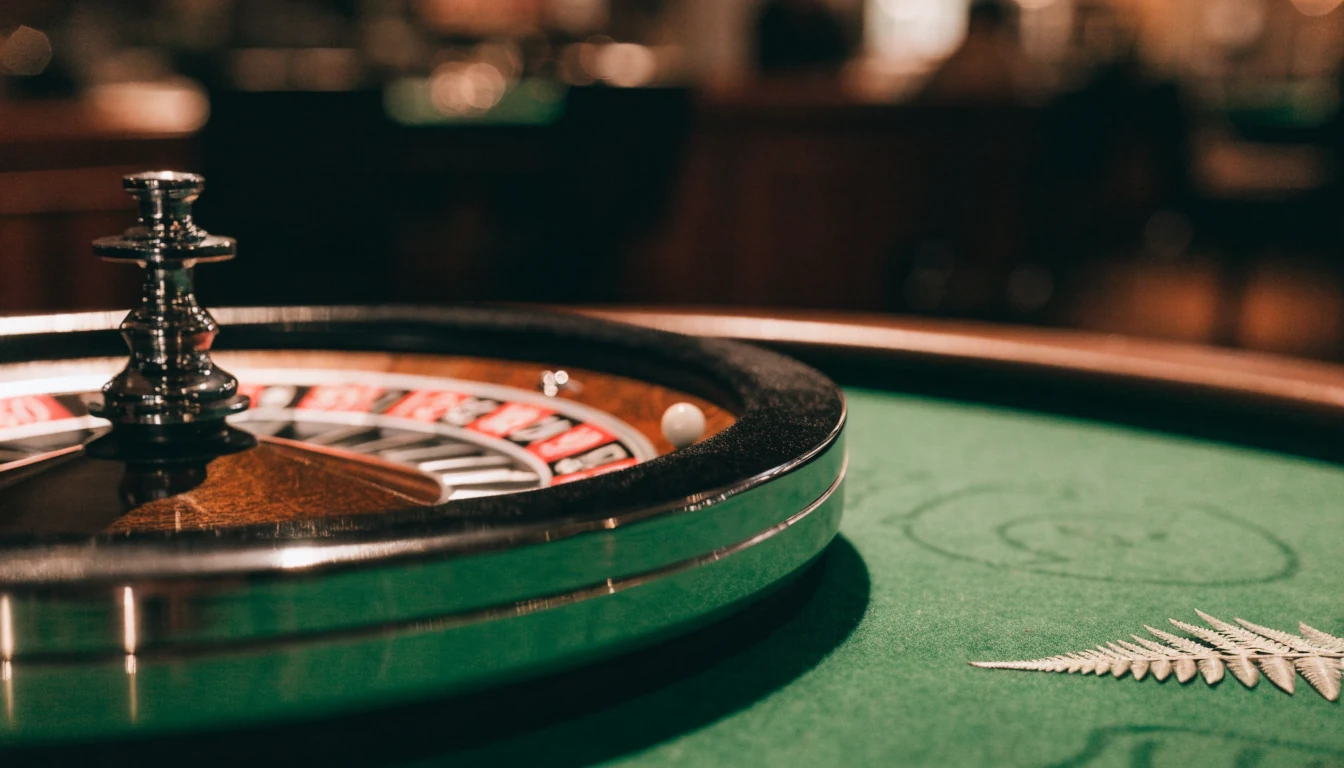
The Main Roulette Wheels and What Their Zeros Mean
The first detail to check on a roulette game is the wheel, not the betting layout printed beside it. European, American and French roulette can look similar at a glance, but their pockets are not arranged in quite the same way. The most important difference is whether the wheel has one zero or two. That changes the set of possible results, even before you consider any special rules attached to a particular version.
A roulette wheel is divided into pockets, and the ball comes to rest in one of them after a spin. Each pocket represents an outcome. The table layout gives you places to select bets, while the wheel determines which pocket can produce the result. A zero is one of those pockets; on an American wheel, the double zero is another distinct pocket, not a second label for the same space.
European roulette: one zero
European Roulette has 37 pockets in total: one is marked zero, and the rest are numbered pockets. There is no double-zero pocket. That single-zero arrangement is the defining feature to look for when distinguishing it from American Roulette.
Understanding roulette rules can help you choose a game and place bets with confidence. Use this list as a reference when considering where to play.
-
BitStarz
- License
- Curaçao Gaming Authority, licence no. OGL/2024/165/0185
BitStarz lists a Curaçao Gaming Authority licence, number OGL/2024/165/0185. You can use that licence detail as part of your research.
-
Wintino
- Payout speed
- 1-3 business days
Wintino states that payouts take 1–3 business days. That timing may be useful to you when considering your play.
-
Ricky Casino
- License
- Tobique Gaming Commission, licence no. 0000002
Ricky Casino lists a Tobique Gaming Commission licence, number 0000002. You can take this licensing information into account when reviewing the casino.
-
7Bit Casino
- License
- Tobique Gaming Commission, licence no. 0000091
7Bit Casino lists a Tobique Gaming Commission licence, number 0000091. You can use the stated licence as a reference point.
-
Zotabet
- License
- 07017519840
- Payout speed
- 1-3 business days
Zotabet lists licence number 07017519840 and states that payouts take 1–3 business days. You can consider both details when reviewing the operator.
-
N1 Casino
- License
- Malta Gaming Authority, licence no. MGA/B2C/394/2017
N1 Casino lists a Malta Gaming Authority licence, number MGA/B2C/394/2017. You can use this information as part of your research.
-
Neospin
- License
- Tobique Gaming Commission, licence no. 0000064
Neospin lists a Tobique Gaming Commission licence, number 0000064. You can consider this licensing detail when assessing the casino.
-
Lamabet
- Payout speed
- 1-3 business days
Lamabet states that payouts take 1–3 business days. You can keep this stated timing in mind when considering the operator.
-
Play Grand
- License
- Malta Gaming Authority, licence no. MGA/B2C/370/2017
Play Grand lists a Malta Gaming Authority licence, number MGA/B2C/370/2017. You can use that detail as part of your research.
For a player, the practical first step is to identify the version named on the game or table. A green zero space on a layout is a useful visual clue, but the label is clearer: European Roulette has one zero, not a zero and a double zero. The number of pockets matters because every spin ends in one of the outcomes available on that wheel. The layout is not merely decorative; it reflects the wheel’s possible results.
If you are comparing tables, avoid relying on a familiar-looking felt pattern alone. Roulette layouts share a recognisable appearance, and the betting areas may make two games seem interchangeable. The wheel type is the more useful identifier. Read the game title and check whether the description specifies a single-zero wheel before treating it as European Roulette.
American roulette: a second zero pocket
American Roulette has 38 pockets. It includes a single zero and a separate double-zero pocket, so its wheel has one more possible result than the European version. The double zero is often marked “00”; that marking distinguishes it from the pocket marked “0.”
This is the central layout difference, not a change in the meaning of the ordinary numbered pockets. A player who moves from a single-zero game to American Roulette is playing on a wheel with an additional green pocket. The difference is easy to miss if attention stays on the betting grid, especially when the game is shown on screen and the wheel is not the largest part of the display.

Check for both zero markings before choosing a game. Seeing a zero does not establish that a wheel is single-zero: American Roulette has that pocket too, alongside the double zero. The precise distinction is whether the wheel contains only one zero pocket or has both markings. Game names and wheel diagrams can help you confirm this before placing a bet.
French roulette: a single-zero wheel with added rules
French Roulette has the same single-zero pocket count and arrangement as European Roulette. Its distinction is not an extra zero, but the availability of special rules, including La Partage and En Prison. Those names identify rules associated with French play; they do not indicate that the wheel has a different number of pockets.
This makes it helpful to separate two questions when reading a game description. First, what wheel is being used? Second, which rules apply to play on that wheel? French roulette answers the first question with a single-zero layout, like European Roulette, while its rule set can include features that are not simply a different pocket marking. A single-zero wheel on its own does not tell you that every French rule is active, so check the game’s stated rules rather than inferring them from the wheel image.
In a digital casino, the displayed name is a useful starting point, but the table information should settle any uncertainty. Look for the wheel type and the rules named for that game. A French title points to the French version, while a description that mentions La Partage or En Prison makes the special-rule distinction explicit. A European title describes the single-zero wheel, but should not be taken as evidence that French rules apply.
European Roulette
37 pockets in total with one single zero.
American Roulette
38 pockets, including both a single zero and a double-zero pocket.
French Roulette
Single-zero layout like European Roulette, but may include special rules like La Partage and En Prison.
For a quick comparison, remember the pocket counts and the extra marking: European Roulette has 37 pockets with one zero; American Roulette has 38, with both a single zero and a double zero; French Roulette follows the European single-zero layout and may add special rules. Once you can tell those versions apart, the rest of the game description is easier to read without confusing a wheel feature with a table rule.
What New Zealand’s Roulette Rules Do—and Do Not—Cover
The rules of roulette describe how the game is played. New Zealand’s gambling laws address a different question: who may provide online casino gambling, and how that activity is regulated. Those two sets of rules should not be confused. A roulette table’s rules do not tell you whether an online casino is licensed under New Zealand law.
The Online Casino Gambling Act 2026 created the country’s first domestic licensing framework for online casino gambling and came into force on 1 May 2026. The Department of Internal Affairs is the primary gambling regulator and oversees the framework. The Gambling Commission handles licensing decisions: it hears and determines casino licensing applications, issues online casino licences and approves changes to licence conditions.
The framework is being introduced in stages. Providers that were already offering services to people in New Zealand before the Act came into force may continue operating during the transition, which runs until 1 December 2026, subject to the Act’s transitional provisions. The full licensing regime is not expected to be operational until 2027. This distinction matters: the existence of a licensing framework does not mean every online casino currently accessible to New Zealanders already holds a New Zealand licence.

That is market regulation, not a special rule for roulette. It does not change how a roulette game settles a bet. Nor should a site’s description of its game be treated as proof of its regulatory status. The legal framework concerns the provider and its authorisation; the game rules concern what happens at the table.
Bonuses have their own conditions
An advertised casino bonus is also separate from roulette’s rules. Offers may come with eligibility requirements, expiry dates, restrictions on which games count towards wagering, and conditions affecting withdrawals. The headline offer is not the whole arrangement: the terms determine who qualifies and what must happen before bonus funds or related winnings can be withdrawn.
For bonus money, the stated condition is to wager the bonus 50X within 30 days. Winnings from free spins must be wagered 50X within 7 days. These are wagering requirements, not roulette rules. They describe how an offer is treated after it is accepted, and they can matter even when the roulette game itself has finished.
A withdrawal request has a further consequence: it voids all active or pending bonuses. If you request a withdrawal while such an offer remains active or pending, you should expect the bonus to be cancelled under that condition. Check the offer terms before accepting it and again before making a withdrawal; eligibility, game contribution and expiry provisions can affect what remains available.
New Zealand’s changing regulatory position makes it particularly important to separate an operator’s promotional claims from its legal status. The Department of Internal Affairs oversees the framework, while the Gambling Commission makes licensing decisions. Neither role is part of the roulette game, and a bonus offer does not establish that a provider is licensed.
When you read about roulette rules for New Zealanders in 2026, keep these layers distinct: game rules explain play, bonus terms govern promotional conditions, and gambling regulation concerns the provider. Treating them as interchangeable can obscure the practical detail that matters most—what applies to the spin, what applies to an offer, and what applies to the operator.
How a Roulette Table Works When the Ball Lands on Zero
Zero can change what happens to an eligible bet at a French roulette table. Two special rules, La Partage and En Prison, alter the handling of even-money outside bets when the ball lands on zero. They do not apply to every bet on the layout, and they are not general rules for all roulette tables.
An even-money outside bet is a wager on an outcome that pays the same amount as the stake when it wins. Common examples include red or black, odd or even, and low or high. These bets cover broad groups of numbers and sit outside the numbered grid on the table. A straight-up bet on one number, for instance, is not an even-money outside bet, so it does not qualify for either rule.

La Partage: half the stake is returned
With La Partage, if zero lands while you have an eligible even-money outside bet, half your stake is returned and the other half is collected. The bet does not win, but you do not lose the whole stake either. The return is part of the rule’s settlement of that spin, rather than a win paid at even money.
The rule therefore changes the result of a zero for the qualifying bet only. It does not mean that half of every wager on the table is returned. If you have also placed a bet that does not qualify, La Partage does not protect that separate stake. Check the table’s rules and the type of wager you have placed rather than assuming the zero treatment applies to the whole layout.
La Partage is exclusive to French roulette. A table carrying that label is not enough, by itself, to establish how a particular bet will be handled: the rule applies only to even-money outside bets, and only when zero lands. If the ball lands on another result, the bet is settled according to that result.
En Prison: the bet is held for another spin
En Prison handles the same narrow category of wager differently. When zero lands, an eligible even-money outside bet is carried forward instead of being settled immediately as a full loss. The stake remains in play for the next spin.
If the next spin produces a result that would win the original outside bet, the stake is returned to you. You receive no additional winnings on it. If the next spin produces a result that would lose the bet, the stake is collected. In other words, the original wager has not become a fresh bet with a potential payout; it has been held over for a specific resolution.
Do
- Identify if your wager is an even-money outside bet
- Note if the table offers La Partage or En Prison
- Follow the relevant settlement when zero appears
Don't
- Assume zero treatment applies to the whole layout
- Assume French rules apply to a table just because of its label
- Assume any chip on the layout qualifies for a refund
That distinction matters when you are following the table. Under La Partage, part of the stake comes back as soon as zero lands. Under En Prison, the stake stays pending until the following spin resolves it. Neither rule turns zero into a winning result for an even-money bet.
The practical steps are simple: identify whether your wager is an even-money outside bet, note whether the table offers La Partage or En Prison, and then follow the relevant settlement when zero appears. A rule for one type of bet should not be read as a refund policy for every chip on the layout. If a table does not state that one of these French rules applies, do not assume it does.
These rules affect the settlement of a bet, not the meaning of the other outcomes. They also do not apply to bets simply because they are placed on a roulette table: the bet must meet the even-money outside-bet condition, and zero must land. That is the boundary to keep in view when reading the table’s rules.
Roulette Odds: The House Edge Behind the Numbers
The house edge is the casino’s theoretical advantage over time, expressed as a share of the money wagered. It is not a prediction of what will happen in a particular session: a player can win or lose, and the stated edge does not determine the result of an individual spin.
For single-zero European Roulette, the stated house edge is 2.70%. In practical terms, that figure describes the game’s long-run mathematical advantage for the house under its standard rules. It is a useful basis for comparing variants, but it should not be read as a fee taken from every bet or as a limit on how much a player could lose.

The comparison changes when French Roulette offers La Partage on eligible even-money outside bets. Under that rule, the effective house edge for those bets falls to 1.35%. That lower figure applies to the qualifying bets, not to every wager on the table. It reflects the more favourable treatment when zero lands; it does not make the outcome predictable or remove the house advantage.
A specialist review reports payout percentages of 97.30% for European Roulette and 94.70% for American Roulette. Those figures offer another way to compare the games, and they point in the same direction: the reported return is higher for European than American Roulette. They should be treated as figures reported by that review, rather than as a universal promise about every game bearing either name. A particular game’s rules and displayed information are worth checking before you play.
The same caution applies to 100/1 roulette. A specialist review gives its payout percentage as a range from 92.86% to 96.19%. The range is a reminder that a variant’s label alone may not tell you exactly which figure applies to the version in front of you. Check the game information supplied with the table rather than assuming that a number reported for one version will describe another.
House edge and payout percentage are related measures, but they are not interchangeable descriptions of a single spin. Both are mathematical summaries used to compare a game over time. Neither says that a particular player will receive a set amount back, and neither makes a losing bet less possible. A higher reported payout percentage, or a lower house edge on an eligible bet, can indicate a more favourable theoretical position for the player; it cannot turn roulette into a reliable source of income.
The distinction between a game-wide figure and a bet-specific one matters especially when French rules are available. The reduced edge associated with La Partage concerns only the eligible even-money bets, so applying that figure to every wager would overstate its reach. Compare like with like, and check which rules the table actually uses before relying on a headline odds figure.
What Double-Zero Roulette Changes
The main practical difference in American roulette is that the wheel has both a zero and a double zero. Together with the numbered pockets, these create 38 possible landing places. The extra pocket matters because it gives the house another outcome that does not count as a win for most player bets.
That changes the game’s house edge: American roulette has a stated house edge of 5.26%. In plain terms, the figure describes the casino’s mathematical advantage over repeated play, not a prediction of what will happen in any particular session. A short run can go either way; the extra zero affects the underlying odds, not the certainty of an individual result.
If you are learning how to play a double-zero wheel, the basic sequence is familiar: choose a bet on the layout, place it before betting closes, and wait for the ball to settle. What changes is how the zero pockets affect the result. A bet on red or black, for instance, does not win if the ball lands on either zero. The same principle applies to other even-money outside bets: both zero positions work against the player rather than belonging to either side of the bet.

The distinction is easy to overlook when comparing tables. A label such as “American roulette” tells you to expect the double-zero layout, but it does not mean that every table adds a special refund rule when a zero appears. In standard American roulette, a zero or double zero does not automatically return half of an even-money stake.
A specialist review describes some Atlantic City American roulette tables as returning half the stake on even-money bets when either zero appears. Treat that as a reported table-specific feature, not as a standard American roulette rule. Before placing a bet, check the table’s stated rules: the wheel label alone does not establish that a refund applies.
This matters most if you are choosing an even-money bet and assuming that a zero will be treated more generously than the rules say. Without a stated exception, the presence of the extra zero is not softened by a half-stake return. The double-zero layout and the table’s own rules are separate things: the first defines the pockets, while the second determines how a bet is settled.
So, when comparing American tables, look for both the wheel type and any explicit wording about zero outcomes. Do not infer a refund from a casino’s location or from the general name of the game. If the rules do not say that half the stake is returned, assume no such return applies. The double zero is not a decorative addition; it is an extra losing outcome for many bets, and that is reflected in the stated house edge.
Reading the Table: Inside, Outside and Called Bets
A roulette table presents the betting options as a layout, usually with numbered spaces and separate areas for broader choices. The position where you place a chip tells the game which selection you have made. A bet on a particular numbered space is different from one placed on a marked area covering a category of outcomes.
Inside bets sit on or around the numbered part of the layout. They let you select individual numbers or small groups of adjacent numbers as they appear on the table. The exact chip position matters: placing a chip within a number’s space selects that number, while placing it on a boundary can select the numbers adjoining that point. If the layout is digital, the game interface may show the selected space or spaces before you confirm the bet.
Outside bets occupy the broader marked areas around the numbered grid. These are categories rather than individual numbers, such as a colour, an even-or-odd result, or a range shown on the table. Read the printed label and check where the chip lands; a chip placed on a category area selects that category, not a number nearby. The table’s markings are the reference, so do not assume that every game presents its controls in precisely the same way.
Called bets are different from both. Rather than being defined by where their numbers sit on the table grid, they group numbers according to their positions around the wheel. That distinction matters because the wheel and the printed layout organise numbers differently. A called bet therefore refers to a wheel-based group, even if the game lets you select it through a menu, a labelled control or a dealer’s call.

Some tables or game interfaces identify called bets by names associated with wheel sections. If you see one, use the table’s explanation or the game’s bet-selection panel to check which numbers it includes. Do not infer the group from a cluster of neighbouring spaces on the printed grid: those spaces may not correspond to neighbouring pockets on the wheel. The label is useful only when you understand the wheel grouping it represents.
For a clear read of any layout, first find the numbered grid, then distinguish its individual spaces from the larger category areas. Look separately for any controls or labels for called bets. Before confirming, check the selection indicator: it should show the number, category or wheel-based group you intended to choose. This is particularly useful on a touchscreen, where a small difference in chip placement can change the bet.
These are practical roulette table betting rules, not a guide to how likely a selection is to win or what it pays. The layout tells you what your chip is assigned to; it does not change the underlying result or turn a wheel-based group into a table-position bet. When the screen or printed markings are unclear, pause and inspect the game’s explanation rather than guessing.
Mini Roulette Has a Different Risk Profile
Mini Roulette is not simply a smaller-looking version of a familiar roulette game. Its wheel has 13 pockets, and its stated house edge is 7.89%. That figure gives you a useful warning: a compact layout does not necessarily mean a lower-cost game for the player.
Mini Roulette House Edge
Standard Mini Roulette has a stated house edge of 7.89%. If La Partage is active and applies to your bet, this edge falls to 3.85%.
The house edge describes the casino’s mathematical advantage over time, not what will happen on a particular spin. A single result can go either way, and a short session may not resemble the long-run expectation. Still, when you compare games, the stated edge is worth checking rather than assuming that roulette variants work out similarly.
La Partage changes the calculation when the rule is offered and applies to your bet. It covers even-money outside bets when zero lands: half the stake is returned, while the other half is collected. With La Partage, Mini Roulette’s stated house edge falls from 7.89% to 3.85%. The improvement is substantial, but it does not make the bet risk-free or remove the casino’s advantage.
Before placing a wager, check the game’s rules to see whether La Partage is active and which bets qualify. The name of the game alone does not tell you that the rule is available. If it is not in force, do not assume that a zero will return part of your stake.
The practical comparison is therefore not only between wheel sizes. You also need to know what happens to an eligible bet when zero appears. A lower edge under La Partage applies to the specified even-money bets, not automatically to every wager on the table.
As with any roulette game, outcomes are random and every real-money bet can lose. A lower stated house edge is not a promise of a better result in your session. Decide what you can afford to lose before you play, and do not stake more than that amount.

Check the Minimum Bet Before You Sit Down
Before choosing a roulette table, find its minimum stake in the game information or on the betting interface. The amount may appear in a table description, a help or rules panel, or beside the chip controls. In a live game, it may also be displayed on the table itself. Check the specific game you intend to play: a minimum shown for one table should not be assumed to apply to another.
The minimum is the smallest stake the game will accept under its displayed betting rules. It is not necessarily the same as the value of the smallest chip shown on screen. If the interface offers chip values, select one and check how the game lets you place it before confirming a bet. The amount accepted for a particular betting position may also depend on the limits displayed for that game.
Read the information before placing chips, not after. If the minimum is unclear, open the game’s rules or table details and look for the betting limits. Do not treat a suggested stake, a selected chip value or a promotional message as confirmation of the minimum. The relevant figure is the one stated for that table or game.
This matters when moving between games, including versions from different providers or tables with different formats. A familiar layout does not establish that the same limits apply. If you cannot find a clear minimum, avoid placing a bet until you have checked the game information; an accidental stake is still a real-money wager.
- Find the minimum stake in the game information or interface
- Check the maximum bet limit
- Verify the value of the smallest available chip
- Confirm the specific limits for the chosen table
Also consider the maximum shown alongside the minimum. Both limits define the permitted range for bets, but neither indicates what you should stake. Choose only an amount that fits your budget, and do not increase it simply because the interface allows a larger bet. The displayed limit tells you what the table accepts, not what you can afford to lose.
How Roulette Payout Percentages Translate
A payout percentage is a long-run estimate of how much of the total amount wagered a game returns to players, not a promise about what you will receive from a particular spin. A specialist review gives American roulette a payout percentage of 94.70% and European roulette a figure of 97.30%. These are attributed estimates, rather than guaranteed returns for every table or session.
The difference is easiest to understand as a comparison between the two stated figures: the European figure is higher. It does not mean that a player is due a particular return after a set number of spins. Individual results can vary sharply, and a short run of play may have little resemblance to a long-run estimate.
A payout percentage also does not tell you how to place a bet or what a winning selection pays under the table’s rules. It summarises the expected return across play, while the rules for individual wagers determine how a result is settled. Treating the percentage as a personal forecast confuses those separate ideas.
The figures should be read with their source in mind. A specialist review’s published percentage is useful for comparing the stated returns of these versions, but it should not be treated as a universal guarantee. If you are looking at a particular game, check the information supplied for that game and confirm which roulette version it uses.
For a player, the practical point is modest: the stated European figure is higher than the American one, but neither figure predicts the outcome of your next spin. A percentage describes an overall return estimate; it cannot tell you whether an individual bet will win, or protect you from losing your stake.

Roulette Strategy Starts With Knowing What Cannot Change
A roulette strategy can shape how you choose and manage bets, but it cannot make a previous result influence the next spin. Spins are independent: the wheel does not remember which numbers have appeared, and a run of one colour does not make the other colour more likely on the next turn.
That matters when a sequence seems to suggest a pattern. A number that has not appeared for a while is not “due”, and a recent run does not guarantee that it will continue. Each new outcome remains random. A betting system may change the size or timing of your stakes, but it cannot alter the wheel’s probabilities or remove the house edge. No progression or staking pattern turns an uncertain bet into a reliable one.
The rules of the table can, however, affect the terms of a bet. French Roulette offers better odds for eligible even-money bets because La Partage and En Prison can soften the effect of zero. These rules apply only to qualifying even-money outside bets; they do not change the outcome of a spin or protect every kind of wager. Check which rules are in force before you play rather than assuming that a French-labelled game applies them.
Keep the distinction clear: a rule may improve the conditions for a particular bet, but it does not guarantee a win. Every real-money bet can lose, including a bet that has won repeatedly. Previous success is no evidence that the next result is more likely to favour you.
Set a spending limit before you start, and treat it as money you may lose. Do not chase losses by increasing stakes or continue because a system appears close to paying off. If the limit is reached, stop. A strategy is useful only when it helps you make deliberate choices; it cannot control the wheel.
Casino Games in New Zealand: Rules and Options
Content created by the «casinotipsnz.com» team