
Understand the Rules Before Choosing a Table
 Available in US
A practical guide to hand decisions, dealer play, table rules and payment details for online blackjack.
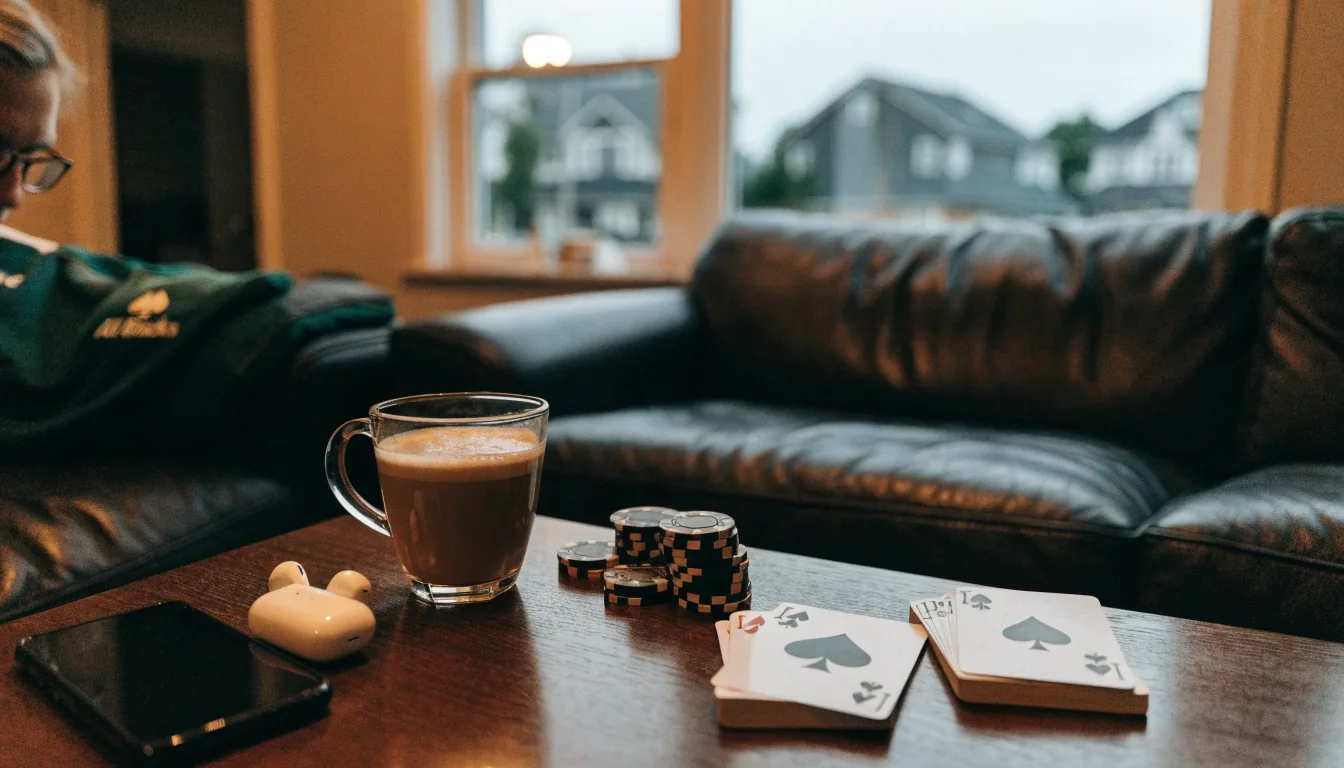
How Blackjack Works at an Online Table
Blackjack is a contest between you and the dealer, not a game in which your hand is compared with the other players’ hands. The aim is to finish with a total nearer to 21 than the dealer’s, while keeping your own total at or below 21. If your cards add up to more than 21, you go bust and lose the hand, even if the dealer later goes bust too.
Each hand begins with cards dealt to you and to the dealer. You use the value of your cards to decide whether your total is strong enough to keep, or whether to take another card in the hope of getting closer to 21. The dealer also has a hand, and the final comparison determines the result. A total below 21 is not automatically a winning hand: the dealer may finish closer to 21, or you may exceed the limit before the comparison takes place.
The card values are straightforward. Number cards count as their face value, while jacks, queens and kings each count as ten. An ace can count as either one or eleven, depending on which value is more useful without taking the hand over 21. This flexibility can make a hand less vulnerable to busting, but it does not guarantee a favourable result. The cards still have to work together, and the dealer’s eventual total matters.
If you’re looking at blackjack sites in New Zealand in 2026, checking the available operator details can help you decide what to look into further. Use these short verdicts as a starting point and verify the details that matter to you.
-
BitStarz
- License
- Curaçao Gaming Authority, licence no. OGL/2024/165/0185
BitStarz is listed with a Curaçao Gaming Authority licence, number OGL/2024/165/0185. You can use that information as a starting point when checking the operator.
-
Wintino
- Payout speed
- 1-3 business days
Wintino lists a payout speed of 1–3 business days. Check the applicable terms to understand how this timing applies to you.
-
Ricky Casino
- License
- Tobique Gaming Commission, licence no. 0000002
Ricky Casino is listed with a Tobique Gaming Commission licence, number 0000002. You can use the licence details as a starting point for your checks.
-
7Bit Casino
- License
- Tobique Gaming Commission, licence no. 0000091
7Bit Casino is listed with a Tobique Gaming Commission licence, number 0000091. The licence number gives you a specific detail to verify when researching the operator.
-
Zotabet
- License
- 07017519840
- Payout speed
- 1-3 business days
Zotabet has the licence identifier 07017519840 listed, and its payout speed is stated as 1–3 business days. Check the relevant terms for details about payouts.
-
N1 Casino
- License
- Malta Gaming Authority, licence no. MGA/B2C/394/2017
N1 Casino is listed with a Malta Gaming Authority licence, number MGA/B2C/394/2017. You can use this licence information as one point to check before deciding whether to explore the site.
-
Neospin
- License
- Tobique Gaming Commission, licence no. 0000064
Neospin is listed with a Tobique Gaming Commission licence, number 0000064. This gives you a specific operator detail to verify as part of your research.
-
Lamabet
- Payout speed
- 1-3 business days
Lamabet lists a payout speed of 1–3 business days. Check the applicable terms for any details about how payouts are handled.
-
Play Grand
- License
- Malta Gaming Authority, licence no. MGA/B2C/370/2017
Play Grand is listed with a Malta Gaming Authority licence, number MGA/B2C/370/2017. You can use the licence information as a starting point when checking the operator.
A natural blackjack is a starting hand consisting of an ace and a ten-value card. It is distinct from reaching 21 after taking more cards: both totals equal 21, but the natural is formed immediately from the opening cards. The exact treatment of a natural can depend on the table, so the label alone does not tell you every detail about how a hand will settle. That is one reason to read the displayed rules before playing, rather than assuming every blackjack table works identically.
During a hand, you may be offered choices such as taking another card or keeping your current total. Other available actions can include doubling down, splitting a pair, or surrendering, depending on the table. These choices affect how your hand proceeds; they do not change the central objective of beating the dealer without going over 21.
For someone arriving at blackjack through online play, the important distinction is that the basic contest remains the same whether the table is on a screen or in a physical venue. You are still trying to make a hand that beats the dealer’s result. The screen may present controls, card graphics and a running total, but those features do not alter the objective. Take time to confirm which hand is yours and which cards belong to the dealer before making a move; a small display error in your own reading can lead to a poor decision.

The name of the game can make 21 sound like a target that must be reached. It is not. A lower total can win if it beats the dealer’s hand, and drawing again simply because your total is below 21 can turn a live hand into a bust. Blackjack therefore involves weighing the hand you already have against the possibility of improving it. The result is not determined by how close you get to 21 in isolation, but by how your final total compares with the dealer’s.
For New Zealand readers looking at blackjack sites in 2026, the rules of a hand are only one part of the setting. The country’s online casino framework is overseen by the Department of Internal Affairs, which is also the primary gambling regulator. The Gambling Commission handles casino licence applications and decides whether to grant them; it also approves changes to licence conditions. These roles concern the regulatory framework, not the outcome of an individual blackjack hand.
The Online Casino Gambling Act 2026 came into force on 1 May 2026 and created a transition period through 1 December 2026. During that period, providers already serving people in New Zealand before the Act began may continue operating under its transitional provisions. The full licensing regime is expected to be operational in 2027. The distinction matters: a description of a blackjack game tells you how its hands work, but it does not, by itself, establish a provider’s regulatory position.
Before you play, make sure you understand the hand in front of you and the choices the table presents. Blackjack is simple to describe—beat the dealer without exceeding 21—but each result depends on both hands, and the dealer’s cards are not merely a backdrop to your own. Knowing that basic structure gives you a clearer basis for understanding the game before considering differences between online tables.
What to Check Before Choosing a Blackjack Website
A blackjack website can offer several games that look similar but do not follow identical rules. The label alone tells you little about how a table plays. Before settling on a game, look for its rules and compare them with those of other tables on the same site. Differences can affect both the decisions available to you and the game’s house edge—the built-in advantage the rules give the operator over time.
Start by checking whether the rules are clearly displayed before you join a table. You should be able to see which version of blackjack you are considering and what conditions apply. If the rules are difficult to find, incomplete or presented only after you have committed to play, you have less basis for comparing the game. A polished page is no substitute for clear terms.
Compare the rules, not just the labels
Variants can change how a hand is played and which choices are available. Some tables may allow surrender, for instance, while others may not. Other rules can affect when the dealer takes another card or how the game handles a natural blackjack. These are not cosmetic details: a change in rules can alter strategy and the house edge.
That does not mean one variant is automatically right for every player. It means you should understand what you are being offered before deciding whether it suits you. If you have learned a particular way to play, check that the table follows the rules your approach assumes. Familiarity with the name of a variant is not enough; read the actual table rules.

It is also worth comparing games within a single website rather than assuming all its blackjack tables work alike. A site may present different variants or rule sets, and the details can matter more than the general description. When the table information is not specific enough to tell you what changes, treat that uncertainty as a reason to pause rather than filling in the gaps yourself.
Look for information you can verify
A useful comparison relies on details you can inspect, not broad claims that a site offers the “best” blackjack. Check whether the rules are available for each game and whether they explain the conditions that affect play. Promotional language cannot tell you how a particular table works. The table’s own terms are the more relevant place to look.
Keep game rules separate from other site conditions. If you are considering playing for money, read the fine print and any bonus conditions before depositing or staking funds. Wagering requirements can treat blackjack differently from other games, and maximum-bet rules may apply while you are meeting those requirements. A bonus headline does not explain those conditions.
You should also distinguish between an attractive selection and a suitable choice. A long menu of games does not establish that the rules are favourable or easy to compare. Nor does a confident description prove that a game matches the description. Focus on what the rules state, and avoid relying on assumptions carried over from another table.
Do
- Compare actual table rules
- Check for clearly displayed terms
- Verify wagering requirements
Don't
- Rely on game labels alone
- Trust broad promotional claims
- Assume all tables work alike
Make the choice at your pace
Decide what you want to compare before opening a game: the variant, the rules that influence play and the clarity of the information provided. If two tables differ, take time to understand the difference rather than choosing by appearance alone. You do not need to treat a quick decision as part of the game.
Set a budget before playing with real money and do not chase losses. If you cannot find or understand a table’s rules, choose not to stake money on it until the terms are clear. The practical measure of a blackjack website is not how persuasively it describes its games, but whether you can tell what you are agreeing to play.
What Changes When You Play With a Live Dealer
Live-dealer blackjack is built around an actual table: a dealer handles physical cards, and the game is shown to you through a video stream. That makes the experience more like watching a casino table than playing against a screen that deals cards through software. You can see the dealer and the cards as the hand unfolds, but you are still participating remotely, not sitting at the table.
The stream is part of the game, not just decoration. The dealer’s actions have to reach your screen, and your decisions have to be registered through the online interface. A delay in the video or in the response to an action can make play feel less immediate. If the image seems to pause, it may be harder to follow the hand in real time; rushing to click through a decision can make that worse. A live table therefore suits you best when you are comfortable with a paced, streamed experience rather than expecting every action to happen instantly.

This difference matters when comparing live blackjack options. A page may describe a table as live, but the practical experience depends on whether you can follow the stream clearly and interact without feeling out of step with the dealer. Before playing, take time to understand how the table interface works and whether its pace feels manageable. Don’t treat a delay as evidence that a result is being changed: a stream can lag, while the cards themselves are still being dealt at the physical table.
Live tables may also require higher bets than other online blackjack games. That can narrow the choice for someone who wants to play at a lower stake, so check the displayed table terms before joining rather than assuming every live table has the same entry conditions. A higher requirement is not a measure of quality; it is simply a condition that may make a particular table unsuitable for your budget.
That is one reason there is no useful universal answer to which live blackjack website is best. The label alone does not tell you whether the stream is comfortable to follow or whether the table’s betting requirement fits your plans. Compare what is shown for the specific table, not just the overall description of a site. If the relevant terms are unclear, do not assume they will match those of another table.
The live format also changes the feel of waiting. In a software-run game, the next action can appear quickly; at a live table, the dealer must handle the cards and the stream must carry that action to you. The more measured pace may feel closer to a casino table, but it can also mean more time between decisions. If you prefer a rapid sequence of hands, that difference is worth considering before you join.
Set a budget before you start and do not chase losses if a session goes badly. A live stream can make play feel more social or immediate, but it does not make outcomes predictable. Choose a table only when its terms are clear and its pace works for you.
How Online Blackjack Games Run
In an online blackjack game run by software, a random number generator (RNG) determines the card sequence. The software shuffles rather than relying on a dealer to handle physical cards. You make your choices through the game interface, and the software processes the hand and presents the result.
That changes the rhythm of play. With no live table action to wait for, hands can move faster than at a live-dealer table. You can make a decision and proceed without a stream or a dealer’s actions slowing the pace. The game may therefore feel more direct, but faster play also means decisions can come in quick succession.
An RNG table is still blackjack, not a different kind of card game. The software runs the dealing and hand progression; you interact with it by selecting the available actions. The exact options and rules depend on the table, so the fact that a game is software-run does not tell you everything about how it plays. Read the displayed rules before starting rather than assuming that every digital table works identically.

The software shuffle is also relevant to expectations about patterns. A sequence of cards appearing in one hand does not establish what the next hand will bring. In RNG play, the software handles the shuffle, so trying to infer upcoming cards from earlier results is not a sound basis for a prediction. A quick interface can make repeated play feel routine, but speed is not evidence that a pattern has emerged.
For the same reason, a game’s presentation should not be mistaken for information about its mechanics. Graphics, animations and sound can make software play feel like a casino table, but they do not change the fact that cards are handled by the game’s software. Look for the table’s rules and its description of the game format, not just the visual style.
The pace is worth considering before you begin. If you prefer time to think between hands, a format that moves quickly may not suit you unless you deliberately pause or stop between rounds. Set a budget before playing with real money, and do not chase losses by extending a session or increasing stakes. A faster sequence of hands can make it easier to lose track of how long you have been playing.
A website offering several software blackjack tables may present different versions of the game, but the format alone does not establish which is best for you. The useful questions are practical: does the table clearly explain its rules, can you follow the pace, and do you understand what the software is doing? The label “RNG” describes how the game runs; it is not, by itself, a promise about outcomes.
Before committing money, read the table information and any applicable bonus conditions on a trustworthy site. If a bonus is involved, check whether blackjack contributes differently to its wagering requirements and whether maximum-bet rules apply while wagering. These terms can affect how you use the game, even though they do not alter the software shuffle itself.
Real-Money Play: Payouts and the Fine Print
A natural blackjack can have a different payout from a win made after drawing more cards. The distinction matters because the payout shown in a table’s rules affects what you receive if your opening hand is a natural. A specialist review reports that some tables pay 3:2 for a natural blackjack, while others pay 6:5. Treat that as a reported difference between tables, not as a rule that applies across the market.
The ratio describes the winnings relative to your stake: at 3:2, a stake of two units earns three units in winnings; at 6:5, five units earn six. The original stake is generally returned as well when a winning bet is settled, but read the table’s own payout wording rather than relying on an assumption about how it displays the total. A lower payout can make a noticeable difference over repeated hands, even when the game looks otherwise familiar.
Before placing a real-money bet, open the table information and find the entry for a natural blackjack. Check whether it states a payout ratio, and whether that ratio applies to the table you have selected. A website may offer more than one blackjack game, so a figure displayed in a general description need not tell you the terms of every table. If the wording is unclear, do not treat the more favourable interpretation as confirmed.

Bonuses add another layer of terms. Read the bonus conditions before accepting an offer or staking money: blackjack may contribute differently from other games towards wagering requirements, and maximum bet rules can apply while you are wagering. These conditions can affect whether play counts towards an offer and what happens if you exceed a stated maximum. The headline offer alone does not explain those consequences.
Keep the payout rule and any bonus terms separate in your decision. A table’s natural-blackjack payout concerns settlement of a hand; bonus conditions govern the offer attached to an account. One does not replace the other, and neither tells you whether the game suits your budget. Set a spending limit before you begin and do not chase losses by increasing stakes. A payout ratio describes a rule, not a promise that a particular hand—or a session—will leave you ahead.
If you are comparing real-money play, the useful question is not which site makes the broadest claim, but whether the specific table and any offer state terms you can understand before you commit funds. Keep a record of the rules shown when you start, and revisit them if you switch tables or activate a bonus. Small-print conditions are still conditions; discovering them after a bet is a poor way to learn how a payout works.
- Confirm the natural blackjack payout ratio (e.g., 3:2 or 6:5)
- Review bonus wagering requirements for blackjack
- Check for maximum-bet rules during wagering
- Set a spending limit and budget
Card Values, Counting and Online Play
Before card counting makes sense, the card values need to be clear. Number cards count at face value, while jacks, queens and kings are each worth ten. An ace can count as either one or eleven, depending on which value helps the hand without taking it over twenty-one. These values are the same whether you play at a physical table or through a website.
Card counting means keeping a mental tally of cards that have appeared, then using that information to estimate how the remaining cards may be distributed. A common approach groups cards by value rather than trying to remember every card individually. It takes concentration, and a running count is not a prediction of the next card. It is an estimate based on what has already been dealt.
There is an important distinction between legality and usefulness. In New Zealand, counting cards through mental calculation is not illegal. That does not mean every online format gives a player useful information to count, or that counting will produce a favourable result. A lawful technique is not automatically an effective one.
With online RNG blackjack, software shuffles the cards. The game can move more quickly than a live-dealer table, but that faster pace does not make mental counting more dependable. When the software shuffles automatically, cards from previous hands do not provide a reliable basis for claiming that you can anticipate what comes next. Anyone presenting card counting as a dependable way to beat online blackjack is making a stronger claim than the game format supports.
This matters when comparing online games. A site’s branding or choice of tables does not, by itself, tell you whether a counting approach is applicable. The relevant question is how the particular game handles its cards; the rules and game information should be clear before you play. Do not treat a list of recommended blackjack websites as evidence that any one of them is suitable for counting.
If you play, set a budget beforehand and do not chase losses. Counting can demand attention, but it cannot remove chance or guarantee a return. Keep the legal point separate from the practical one: mental card counting is not prohibited by New Zealand law, while automatic software shuffles do not support a claim that counting works as a reliable online strategy.
The Decisions You Can Make During a Hand
Once your cards are dealt, blackjack comes down to a small set of choices. You can ask for another card, stop taking cards, increase your stake while taking one more card, or split a pair into separate hands. The names are simple; the decisions depend on the cards in front of you and the risk you are willing to take.
Hit or stand
To hit is to take another card. You might choose this when your current hand is unlikely to beat the dealer without improving. But each additional card brings the possibility of going over 21, which ends that hand as a loss.
To stand is to keep your total and take no more cards. That can make sense when you think another card is more likely to push you over 21 than to improve your position. Standing does not settle the outcome immediately: the dealer still plays, and your hand is compared with theirs.
Hit
Take another card to improve your total, risking a bust if you exceed 21.
Stand
Keep your current total and end your turn, comparing your hand to the dealer's.
Neither choice guarantees a result. The same total can call for different thinking depending on the dealer’s visible card and the table’s rules. A decision that feels cautious may still leave the dealer room to win; taking a card may improve your hand or bust it.
Double down
Doubling down means increasing your stake in exchange for taking one more card, then standing. It is a more committed choice than hitting: you get only that additional card, and the amount at risk on the hand rises.
Consider it only when the rules permit it and you are comfortable with the larger stake. A useful discipline is to decide your budget before play begins and not raise it to recover losses. A promising-looking hand is not a reason to treat a larger wager as certain.
Split
If your first two cards form a pair, you may be able to split them into two hands. Each hand is then played separately, and splitting requires an additional stake. It can create a better opportunity than keeping the pair together, but it also puts more money into play and leaves two hands to resolve.
The options available after a split can depend on the table. Check what the game permits before making the choice rather than assuming every hand will proceed in the same way.
A clear way to approach each decision is to pause, identify the available action, and consider both what it could improve and what it could cost. Blackjack offers choices, not a reliable system for turning a hand into a win.
Payment Claims and Blackjack Table Terms
A payment logo or a line in a promotional page is not enough to establish that a particular deposit method is available. If you are looking for a blackjack site that accepts PayPal, check the operator’s current payment terms and cashier before relying on the claim. Availability may depend on the site’s rules, and a method shown in general payment information may not be available for every transaction. Confirm the details directly rather than assuming that a search result or an old review is still accurate.
The same caution applies to lists described as the best or top blackjack sites. A ranking is useful only if its criteria are clear and the details can be checked. A prominent position does not establish that a site offers a particular payment option, or that the blackjack tables suit your preferences. Compare the information that matters to your decision, and treat unverified claims about payment methods as claims, not confirmed features.
The game itself also needs checking. Blackjack rules are not identical across tables: the number of decks, the dealer’s action on a soft 17, surrender availability and the payout for a natural blackjack can differ. A specialist review has described these features as variable between games; the table’s own rules are the more relevant reference when you are deciding whether to play. Do not assume that one game’s terms apply to every blackjack table on the same site.
Before staking money, read the table rules alongside the site’s current terms. Check how blackjack contributes to any wagering requirements and whether maximum bet rules apply while meeting them. Bonus conditions can affect the practical value of an offer, so do not treat a headline promotion as a substitute for its full terms. If a rule or payment condition is unclear, pause rather than filling in the gap with an assumption.
A sensible comparison is about verifiable details, not a promised ranking. Confirm the payment method where the transaction is handled, then check the rules and payout shown for the specific table. Set a budget before you play and do not chase losses; a payment option or a favourable-sounding table rule does not change the risk of losing money.
Why Deck Count and Table Rules Matter
A blackjack table’s rules affect more than its presentation. The number of decks and the dealer’s actions can differ between games, so two tables described as blackjack may not offer the same conditions. If you are comparing blackjack casino sites in New Zealand, check the rules attached to the specific table rather than relying on a general description of the game.
Deck count is one detail worth confirming. A single-deck table uses one deck of cards, while other tables may use more. That difference is relevant when comparing games, but it does not by itself establish that a table is better for you. The rest of the rules matter too, and a single-deck label is not a substitute for reading them.
Look for the rule on soft 17. A soft 17 is a hand containing an ace counted as 11 that totals 17. Depending on the table, the dealer may hit that hand or stand. This changes how the dealer plays, so it can affect your decisions and the game’s house edge—the built-in advantage the rules give the casino over time.
Surrender is another rule that may or may not be available. Where allowed, it lets a player give up a hand under the table’s stated conditions. Blackjack payouts can also differ between games. These details are not reliably inferred from a site’s general description; check the rules shown for the table itself.
A specialist review reports that deck counts, soft-17 rules, surrender and payouts vary across games. Treat that as a reason to verify the current table terms, not as a guarantee that a particular site offers any given setup. Rules can change, and descriptions may cover a game family rather than the exact table you open.

If you are looking for single-deck blackjack online, confirm that the table explicitly states its deck count. Then compare the dealer’s soft-17 rule, surrender availability and payout terms before choosing. The label alone cannot tell you how the full set of rules plays out.
Bitcoin Searches: Verify the Payment Details
A site’s mention of Bitcoin does not, by itself, establish that you can use it to fund a blackjack account or withdraw winnings. Payment options can depend on the operator’s current terms and the account process, so check the relevant payment information directly before relying on a claim. Confirm whether Bitcoin is accepted for deposits, withdrawals, or both, and whether the terms explain any restrictions that apply. A payment logo or a search-result description is not enough to settle those details.
This matters especially when a site presents itself as one of the best places to play. A ranking is not proof that its payment claims are current, or that the same options apply to every customer. Read the operator’s own terms and look for clear, consistent information about payment methods. If the details are vague or conflict with other statements on the site, treat the claim cautiously rather than assuming the option is available.
Keep the payment question separate from how the blackjack game works. Online RNG blackjack uses software to shuffle the cards, and hands can move faster than at a live-dealer table. That format does not verify a Bitcoin payment option, nor does a payment method tell you anything about the game’s shuffle.
Before depositing, check the current payment terms and the blackjack table’s rules and payout information. If you choose to play for money, set a budget and do not chase losses. The practical point is simple: verify each claim on the operator’s site before making a payment decision.
Casino Games in New Zealand: Rules and Options
Content created by the «casinotipsnz.com» team